Why Alternative Energy Technologies Are Reshaping Investment Portfolios in 2026
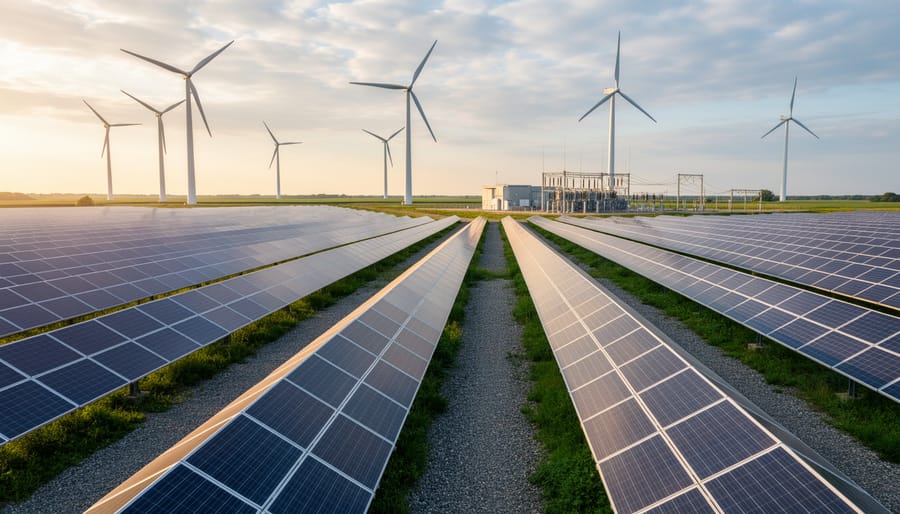
Renewable energy and alternative energy encompass a portfolio of technologies that generate power from naturally replenishing sources like sunlight, wind, water, and organic matter, offering investors exposure to one of the most significant economic transformations of the 21st century. As of 2026, these technologies have matured from niche solutions into mainstream assets, with solar photovoltaics, wind turbines, hydroelectric systems, and biomass facilities collectively generating over 40% of global electricity and attracting more than $600 billion in annual investment capital.
The distinction matters for your portfolio strategy. While the terms are often used interchangeably, renewable energy specifically refers to sources that regenerate on human timescales, whereas alternative energy broadly includes any substitute for conventional fossil fuels. This difference affects risk profiles, regulatory treatment, and return expectations across investment opportunities.
Three factors drive the investment case in 2026. Technology costs have plummeted by 70-90% over the past decade for solar and wind, making these options economically competitive without subsidies in most markets. Policy frameworks, from tax incentives to carbon pricing mechanisms, continue to favor clean energy deployment across major economies. Corporate and institutional demand for renewable power purchase agreements has created stable, long-term revenue streams that reduce project risk.
Understanding how these technologies function, their current economics, and their trajectory helps you identify which segments align with your investment goals. A utility-scale solar farm operates differently from a residential rooftop system, and those operational differences translate directly into cash flow patterns, maintenance requirements, and scalability potential. Whether you’re considering direct project investment, publicly traded renewable energy stocks, or green bonds, grasping the fundamentals separates informed decisions from speculation.
Understanding the Alternative Energy Landscape
When you begin exploring energy investment opportunities, you’ll encounter terms like “renewable energy,” “alternative energy,” and “clean energy” used interchangeably, yet they don’t mean exactly the same thing. Understanding these distinctions isn’t just semantic hair-splitting; it directly shapes which sectors you evaluate and how you assess their long-term viability.
Renewable energy refers to power sources that naturally replenish on human timescales: solar, wind, hydroelectric, geothermal, and biomass. These technologies harness ongoing natural processes rather than depleting finite reserves. Alternative energy casts a wider net, encompassing any energy source that offers an alternative to conventional fossil fuels, including renewables but also nuclear power and potentially hydrogen derived from various feedstocks. Clean energy focuses on environmental impact, describing sources that produce minimal greenhouse gas emissions and pollutants during operation.
- Renewable Energy
- Power generated from naturally replenishing sources such as sunlight, wind, water flow, and geothermal heat. These resources regenerate continuously and cannot be depleted through use.
- Alternative Energy
- Any energy source that serves as an alternative to conventional fossil fuels, including all renewables plus nuclear power and certain emerging technologies. The defining characteristic is departure from coal, oil, and natural gas.
- Clean Energy
- Energy sources that produce little to no greenhouse gas emissions or air pollutants during operation. This category overlaps significantly with renewables but emphasizes environmental outcomes rather than resource characteristics.
The practical investment implication becomes clear when you consider nuclear power: it’s alternative and clean, but not renewable. Similarly, biomass qualifies as renewable since organic matter regrows, yet its combustion produces emissions that challenge its “clean” classification. For your portfolio, these distinctions matter because policy incentives, public sentiment, and regulatory frameworks often treat these categories differently. A renewable energy mandate might exclude nuclear investments entirely, while a clean energy standard could embrace both solar and nuclear equally. Recognizing where a technology sits within this landscape helps you anticipate which policy winds will lift particular investments and which might face headwinds despite technical merit.
Core Alternative Energy Technologies Driving Today’s Markets
Solar Power Technologies
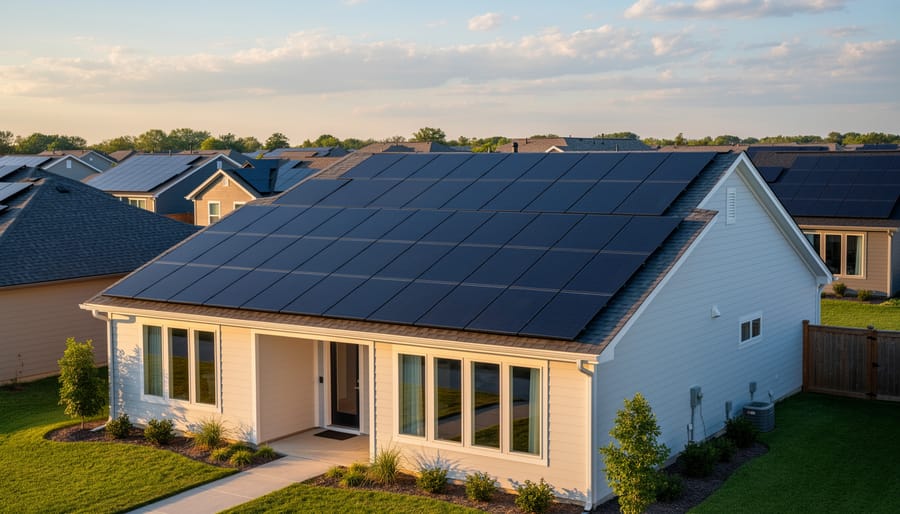
Solar power remains the most accessible entry point for investors exploring alternative energy. Photovoltaic systems dominate installations in 2026, converting sunlight directly into electricity through semiconductor materials. Standard silicon-based panels now achieve 22-24% efficiency in commercial applications, nearly double the rates from a decade ago. This efficiency gain, combined with manufacturing scale, has pushed installed costs below $1 per watt in many markets, a threshold that makes solar cost-competitive with grid electricity across most geographies without subsidies.
Concentrated solar power offers a different approach, using mirrors to focus sunlight and generate heat for turbine-driven electricity production. CSP systems include built-in thermal storage, allowing power generation after sunset. While capital-intensive, these plants suit utility-scale projects in high-irradiance regions like the southwestern United States and Middle East.
The technology frontier centers on perovskite solar cells, which layer synthetic crystals atop silicon to capture broader light wavelengths. Lab prototypes exceed 33% efficiency, and perovskite solar market growth signals commercialization is accelerating. Manufacturing challenges around stability and scaling remain, but pilot production lines are now operational. Investors tracking this space should note the five-to-seven-year timeline before perovskites significantly displace silicon in residential markets, though niche applications may arrive sooner.
Market penetration continues its climb: solar represented 4.5% of global electricity generation in 2025, with projections reaching 7% by 2028 as grid integration improves and storage costs decline.
Wind Energy Systems
Wind energy stands as one of the most bankable alternative energy technologies in 2026, with both onshore and offshore sectors offering distinct investment profiles. Onshore wind has reached cost parity with fossil fuels in many markets, delivering capacity factors between 35 and 45 percent in prime locations. Modern turbines now exceed 4 megawatts nameplate capacity, with hub heights pushing past 100 meters to access stronger, steadier winds.
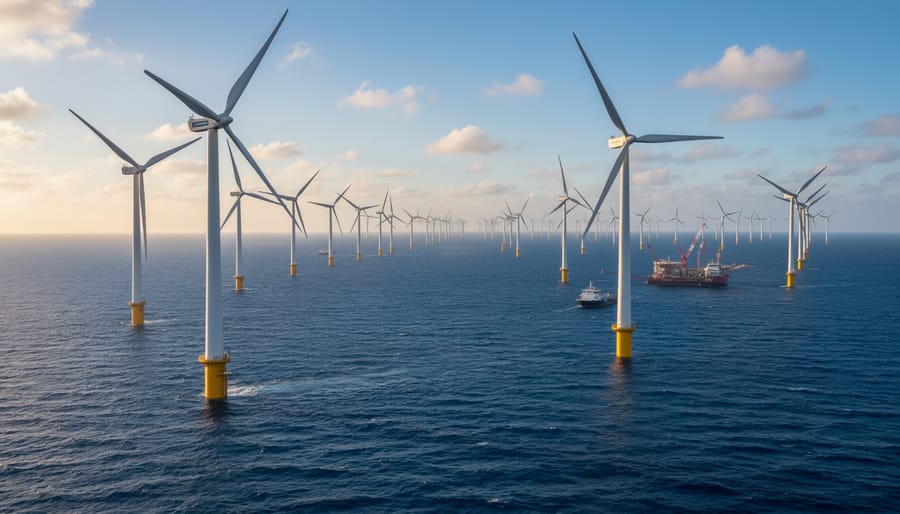
Offshore wind represents the higher-growth frontier. Floating turbine platforms unlock deeper waters previously inaccessible, expanding viable deployment zones dramatically. Offshore capacity factors routinely reach 50 to 60 percent thanks to consistent marine winds, though installation costs remain 1.5 to 2 times higher than onshore equivalents. Major projects off European coasts and emerging U.S. Atlantic installations demonstrate commercial viability at scale.
Technology improvements continue compressing costs. Larger rotor diameters capture more energy per turbine, reducing balance-of-system expenses. Predictive maintenance powered by sensors and data analytics cuts downtime. The industry’s track record of record wind turbine installations reflects maturing supply chains and developer confidence.
Geographic trends favor regions with strong wind resources and supportive policy frameworks. Texas leads U.S. onshore deployment; China dominates global capacity. For investors, understanding these operational fundamentals and regional dynamics separates viable wind projects from speculative bets.
Energy Storage Solutions
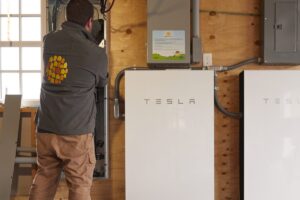
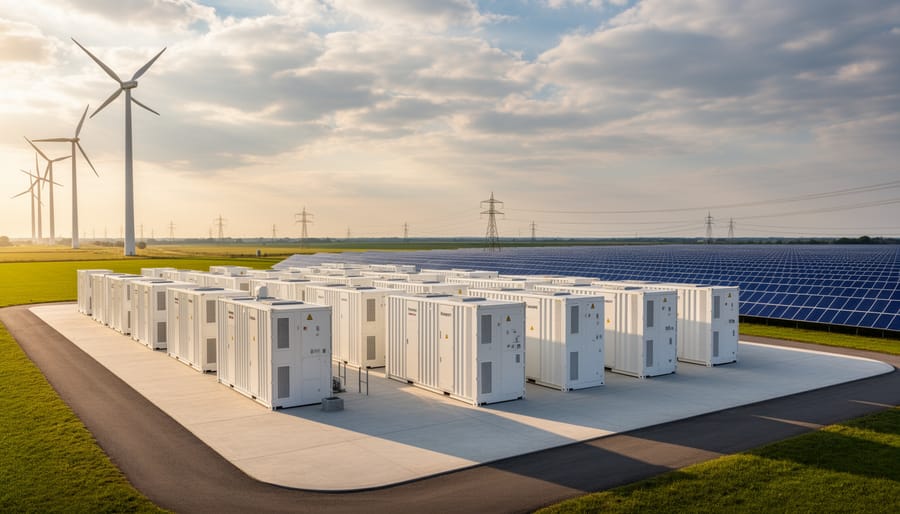
Energy storage has emerged as the linchpin technology that transforms intermittent renewable sources into reliable baseload power. Without adequate storage, solar and wind generation face inherent limitations, the sun doesn’t always shine, and wind doesn’t always blow, which historically made large-scale renewable deployment challenging for grid operators and less attractive for risk-averse investors.
Lithium-ion batteries currently dominate the commercial storage market, benefiting from decades of development for electric vehicles and consumer electronics. These systems offer high energy density, declining costs (down roughly 89% since 2010), and proven reliability at utility scale. Major installations now routinely exceed 100 megawatt-hours, providing grid stabilization and peak-shaving services that generate revenue streams independent of renewable generation. The technology’s maturity makes it the default choice for near-term projects, though concerns about lithium supply constraints and thermal management persist.
Solid-state batteries represent the next evolution, replacing liquid electrolytes with solid materials to improve energy density, safety, and cycle life. While still largely in pilot phases for grid applications, several manufacturers project commercial deployment between 2027 and 2029. The investment thesis hinges on superior performance metrics rather than cost parity with lithium-ion in the immediate term.
Flow batteries offer a different value proposition: decoupled energy and power capacity, longer duration discharge (four to twelve hours versus two to four for lithium-ion), and virtually unlimited cycling without degradation. Vanadium redox and zinc-bromine chemistries suit applications requiring sustained output rather than rapid response. Their higher upfront costs currently limit deployment, but they fill a specific niche for renewable integration where duration matters more than response time.
Beyond electrochemical storage, pumped hydro remains the world’s largest storage resource by capacity, though geographic constraints limit new development. Compressed air energy storage, thermal storage systems, and gravity-based solutions are emerging as location-specific alternatives, each with distinct investment risk profiles and timelines to commercial viability.
Emerging Technologies to Watch
Beyond solar, wind, and storage, several alternative energy technologies are transitioning from laboratory concepts to commercial viability, each presenting distinct investment timelines and risk profiles for 2026.
Hydrogen fuel cells have matured considerably, with applications spanning transportation, industrial processes, and grid-scale energy storage. Green hydrogen, produced via electrolysis powered by renewables, addresses the intermittency challenge while decarbonizing hard-to-electrify sectors like shipping and heavy manufacturing. The technology faces infrastructure buildout requirements and production cost hurdles, making it a medium-term investment with substantial government backing accelerating deployment. Current electrolyzer efficiency improvements and falling renewable electricity prices are narrowing the cost gap with grey hydrogen.
Geothermal energy, particularly enhanced geothermal systems (EGS), now accesses heat resources previously considered uneconomical. Advanced drilling techniques borrowed from oil and gas enable development beyond traditional volcanic regions. Geothermal provides baseload power with minimal land footprint, though high upfront drilling costs and geological uncertainty create project-specific risk.
Tidal and wave energy remain early-stage technologies with limited commercial deployment. Harsh marine environments challenge equipment durability, and high installation costs currently exceed competitive LCOE thresholds. Patient capital with decade-plus horizons might consider pilot projects, but widespread commercial viability likely extends beyond 2030.
Small modular reactors (SMRs) represent next-generation nuclear with factory construction, passive safety systems, and flexible siting. Regulatory approvals are advancing, yet first-of-a-kind deployment risks and unproven economics at scale suggest cautious near-term positioning despite long-term decarbonization potential.
Grid Modernization and Smart Infrastructure
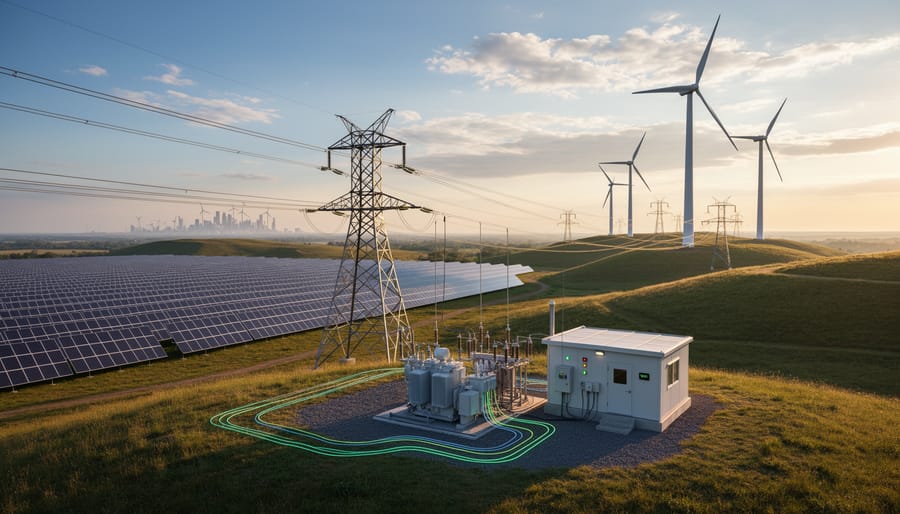
Grid modernization stands as the connective tissue enabling widespread alternative energy adoption, transforming century-old electrical infrastructure into intelligent networks capable of managing intermittent renewable generation. Smart grids use sensors, automated controls, and real-time data analytics to balance supply and demand dynamically, essential when solar and wind output fluctuates throughout the day. Demand response systems shift electricity consumption to match renewable availability, reducing reliance on fossil-fuel peaker plants while creating revenue streams for participating consumers and businesses.
The investment case extends beyond utility-scale projects. Advanced metering infrastructure, grid-scale software platforms, and transmission capacity expansions represent multi-billion-dollar opportunities as utilities and governments prioritize renewable integration. In 2026, transmission bottlenecks constrain renewable deployment in many regions, making high-voltage direct current lines and regional interconnections critical infrastructure needs. These modernization efforts don’t just support renewable energy, they create entirely new investment categories where technology meets traditional energy infrastructure, offering exposure to the energy transition without direct generation asset ownership.
The Economics Behind Alternative Energy Technologies
The economics of alternative energy have fundamentally transformed over the past decade, shifting from subsidy-dependent to cost-competitive across most markets. For investors evaluating opportunities in 2026, understanding these economic dynamics isn’t academic, it directly affects return potential and risk profiles.
Levelized cost of energy (LCOE) remains the most useful metric for comparing different generation sources. LCOE calculates the total lifetime cost of building and operating a power plant divided by its total electricity output, expressed as dollars per megawatt-hour. This accounting method captures capital expenditure, operational costs, fuel expenses, and maintenance over the asset’s lifespan, providing an apples-to-apples comparison across technologies with different cost structures.
| Technology | LCOE Range ($/MWh) | Primary Cost Drivers |
|---|---|---|
| Utility Solar PV | $24, $42 | Upfront capital, panel efficiency |
| Onshore Wind | $27, $47 | Site wind resources, turbine costs |
| Offshore Wind | $52, $78 | Installation complexity, grid connection |
| Natural Gas Combined Cycle | $39, $68 | Fuel prices, capacity factor |
| Coal | $62, $148 | Fuel costs, emissions compliance |
These 2026 estimates reveal why capital is flowing toward renewables. Utility-scale solar and onshore wind now undercut fossil alternatives in most regions, even without subsidies. Solar’s LCOE has dropped 90% since 2010, driven by manufacturing scale, efficiency gains, and streamlined installation. Wind benefits from larger turbines capturing more energy and higher capacity factors.
The cost structure differences matter significantly for investors. Renewable projects carry high upfront capital expenditure but negligible fuel costs and predictable maintenance expenses. This creates stable, long-term cash flows once operational. Fossil fuel plants require lower initial investment but face volatile fuel costs and increasing carbon compliance expenses that erode margins over time.
Subsidies and incentives still shape project economics, though their role has evolved. Investment tax credits, production tax credits, and accelerated depreciation in the U.S. improve project returns by 15-30%. Many jurisdictions offer feed-in tariffs or renewable energy certificates that guarantee revenue floors. However, the critical shift is that projects increasingly pencil out on merchant economics alone, subsidies enhance returns rather than enabling viability.
Corporate power purchase agreements have emerged as crucial economic drivers. Companies like Amazon, Google, and Microsoft now contract directly with renewable developers, providing revenue certainty that reduces financing costs and attracts institutional capital. These agreements signal confidence in long-term cost competitiveness and create bankable projects outside traditional utility structures.
Policy and Regulatory Framework Shaping the Sector
The regulatory landscape has evolved into one of the most powerful forces determining where capital flows in alternative energy. In 2026, investors who understand policy mechanics gain a decisive advantage in identifying which markets and technologies will see accelerated growth versus those facing headwinds.
Carbon pricing mechanisms have matured significantly, with over 40 jurisdictions now implementing either carbon taxes or cap-and-trade systems. The EU Emissions Trading System, expanded to include maritime transport and buildings, has pushed carbon prices above €90 per tonne, fundamentally altering the economics of coal and gas generation. California’s linked carbon market with Quebec and Washington has created a North American pricing corridor that directly benefits solar and wind developers by making fossil alternatives more expensive. For investors, jurisdictions with robust carbon pricing offer more predictable returns because the cost advantage of renewables gets locked in through policy rather than remaining vulnerable to volatile fossil fuel prices.
Renewable Portfolio Standards continue driving deployment across U.S. states, with 30 states now mandating that utilities source 40-100% of electricity from renewables by 2030-2040. These mandates create guaranteed demand, reducing market risk for projects in those regions. Similarly, feed-in tariffs in countries like Germany and Japan, though less generous than a decade ago, still provide long-term revenue certainty that institutional investors value.
International frameworks matter more in 2026 than ever before. The Paris Agreement’s ratcheting mechanism has pushed 150 countries to strengthen their Nationally Determined Contributions, translating to trillions in committed renewable infrastructure spending. The U.S. Inflation Reduction Act’s production and investment tax credits have created a 10-year visibility window that has unlocked over $400 billion in announced projects domestically.
Conversely, regulatory uncertainty remains the sector’s primary risk. Policy reversals, permitting bottlenecks, and inconsistent grid interconnection rules can strand capital quickly. Savvy investors track not just current incentives but legislative stability and political commitment to energy transition goals when allocating across geographies.
Investment Implications and Market Trends for 2026
Understanding the technical foundations of alternative energy technologies positions investors to identify genuine opportunities versus hype cycles. The 2026 market reflects a clear bifurcation between technologies entering mature commercialization and those still requiring patient capital.
Solar and onshore wind represent investment-ready sectors with established returns. These technologies have crossed the commercialization threshold, with predictable cash flows and proven track records. The risk profile resembles traditional infrastructure investments more than speculative ventures. Battery storage, particularly lithium-ion systems for grid applications, has similarly transitioned into the mainstream category. Investors can access these through direct project ownership, publicly traded utilities with renewable portfolios, or specialized clean energy funds.
Offshore wind occupies a transitional position. While technologically proven, project economics vary significantly by geography, requiring deeper due diligence on regulatory frameworks and power purchase agreements. The investment case strengthens in markets with established offshore supply chains and favorable grid connections.
Technologies like green hydrogen, advanced geothermal, and wave energy remain speculative plays better suited for venture capital allocations than core portfolio positions. These sectors show promise but face commercialization hurdles spanning five to ten years. Small modular nuclear reactors sit in this category despite their theoretical advantages, given regulatory uncertainties and limited deployment data.
Several market trends merit close attention as you evaluate opportunities:
- Corporate power purchase agreements reaching record volumes, providing revenue certainty for projects
- Energy storage deployment outpacing generation additions, creating asymmetric opportunities in the storage sector
- Geographic shift of manufacturing capacity, particularly solar panel and battery production returning to North America and Europe
- Integration of artificial intelligence for grid management, creating software and services investment angles beyond hardware
- Retirement timelines for coal and natural gas plants, opening capacity replacement opportunities in specific regional markets
Growth projections for 2026 show the alternative energy sector expanding at roughly three times the rate of conventional energy infrastructure. This differential creates portfolio diversification benefits even for investors primarily focused on traditional energy.
The key insight from understanding technology fundamentals is recognizing which cost components drive returns. Solar investments hinge on panel efficiency and land costs. Wind projects live or die on capacity factors and transmission access. Storage economics depend on cycle life and throughput. Investors who grasp these technical levers make better decisions about project valuations and risk-adjusted returns than those treating the sector as an undifferentiated green investment theme.
Understanding the fundamentals of alternative energy technologies isn’t just academic, it’s the foundation for making smart investment decisions in one of this decade’s most dynamic sectors. As we’ve explored throughout this guide, from solar’s evolving efficiency to storage’s critical enabling role, each technology carries distinct risk-reward profiles that only become clear when you grasp how they actually work.
The 2026 landscape offers unprecedented opportunities, but separating genuine potential from hype requires the background knowledge we’ve covered. Whether you’re drawn to the mature markets of wind and solar, intrigued by hydrogen’s long-term promise, or evaluating grid infrastructure plays, your ability to assess feasibility, cost trends, and policy impacts directly determines your portfolio outcomes.
This is where community becomes invaluable. Investment success in alternative energy isn’t a solitary pursuit, it’s enriched by shared insights, real-world experiences, and diverse perspectives. We encourage you to take your next step by diving deeper into specific sectors that align with your interests and risk tolerance. Explore detailed analyses of individual technologies, track emerging market trends, and most importantly, join forum discussions where investors at every level share strategies and lessons learned.
The energy transition is reshaping markets in real time. Equipped with solid technical understanding and connected to a community of like-minded investors, you’re positioned to capitalize on opportunities others might miss. Start today by choosing one technology area to research further, then bring your questions and insights to the conversation.