What Is Geothermal Energy (and How Do Heat Pumps Unlock Its Potential)?
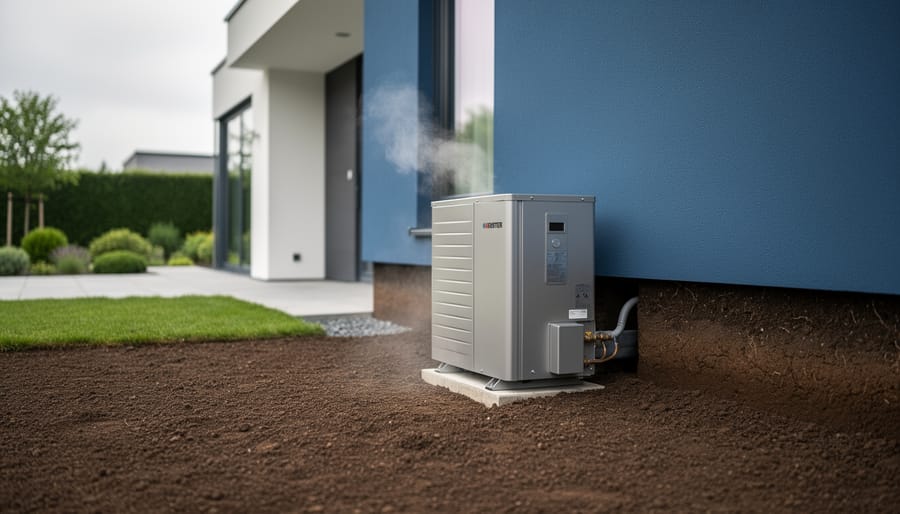
Geothermal energy harnesses stable underground temperatures to heat and cool buildings with remarkable efficiency, a technology that has quietly matured from niche curiosity into a viable cornerstone of sustainable energy strategy. Unlike solar panels or wind turbines that depend on weather, geothermal heat pumps tap into the earth’s constant subterranean warmth, transferring heat rather than generating it through combustion or resistance.
For investors and homeowners evaluating energy alternatives in 2026, geothermal represents a compelling but often misunderstood opportunity. The technology’s appeal lies in its physics: a few feet below the surface, soil temperature remains relatively constant year-round, providing an efficient thermal battery that heat pumps can exploit. This principle translates into systems that can dramatically reduce heating and cooling costs compared to conventional HVAC, though upfront installation requires significant capital and careful site assessment.
The investment case for geothermal extends beyond residential applications. Commercial properties, industrial facilities, and even agricultural operations are discovering that ground-source heat pumps can deliver long-term operational savings that offset higher initial costs. Yet the sector faces persistent barriers: installation complexity, permitting challenges, and a shortage of trained technicians in many regions continue to slow adoption despite favorable economics.
This article breaks down what potential investors and adopters need to understand about geothermal energy systems. We’ll explain how the technology actually works beneath the marketing claims, examine the different system configurations available, and analyze the practical considerations that determine whether geothermal makes financial sense for a given property or portfolio. Whether you’re considering your first alternative energy investment or evaluating geothermal’s place in a diversified renewable strategy, understanding both the capabilities and constraints of this technology is essential for making informed decisions in an evolving energy market.
What Geothermal Energy Means for Investors
Geothermal energy is heat stored beneath Earth’s surface, continuously generated by the planet’s core and retained in soil, rock, and underground water. Unlike solar or wind resources that fluctuate with weather, this thermal energy remains relatively constant just a few feet below ground, creating a reliable foundation for renewable energy applications that’s catching investors’ attention.
The term encompasses two distinct opportunities that matter for investment purposes. Deep geothermal projects tap heat from far underground, often thousands of feet down, to generate electricity through steam-powered turbines. These large-scale installations require significant capital and specific geological conditions, limiting their deployment to volcanic regions and geothermal hotspots like Iceland or parts of the western United States.
Shallow geothermal applications, by contrast, access heat stored in the top 300 feet of Earth’s crust through heat pump systems. This approach works nearly anywhere on the planet because it leverages the stable ground temperature found at relatively shallow depths rather than requiring extreme heat sources. The technology doesn’t generate electricity; it moves existing heat between buildings and the earth, providing both heating in winter and cooling in summer with remarkable efficiency.
- Geothermal Gradient
- The rate at which temperature increases with depth below Earth’s surface, typically rising about 25°C per kilometer in most locations. This gradient creates the thermal resource that both power plants and heat pumps exploit.
- Ground-Source Energy
- Heat naturally stored in shallow soil and rock, maintaining temperatures between 10-15°C year-round at depths of 10-20 feet in most climates. This stable thermal reservoir powers geothermal heat pump systems.
- Closed-Loop Systems
- Heat pump configurations where fluid circulates through sealed underground pipes, exchanging heat with the earth without direct contact. These systems dominate residential and commercial installations because they work in diverse soil conditions.
- Thermal Conductivity
- A material’s ability to transfer heat, measured in watts per meter-kelvin. Soil and rock with higher thermal conductivity allow more efficient heat exchange in geothermal systems, influencing system design and performance.
What makes this sector compelling for investors is the intersection of proven technology, supportive policy tailwinds, and growing demand for building decarbonization. Governments across Europe and North America are implementing regulations that favor or mandate low-carbon heating solutions, while rising energy costs push building owners toward alternatives that reduce operating expenses. Geothermal heat pumps address both pressures simultaneously, creating market momentum that extends beyond niche applications into mainstream adoption opportunities.
How Geothermal Heat Pumps Work
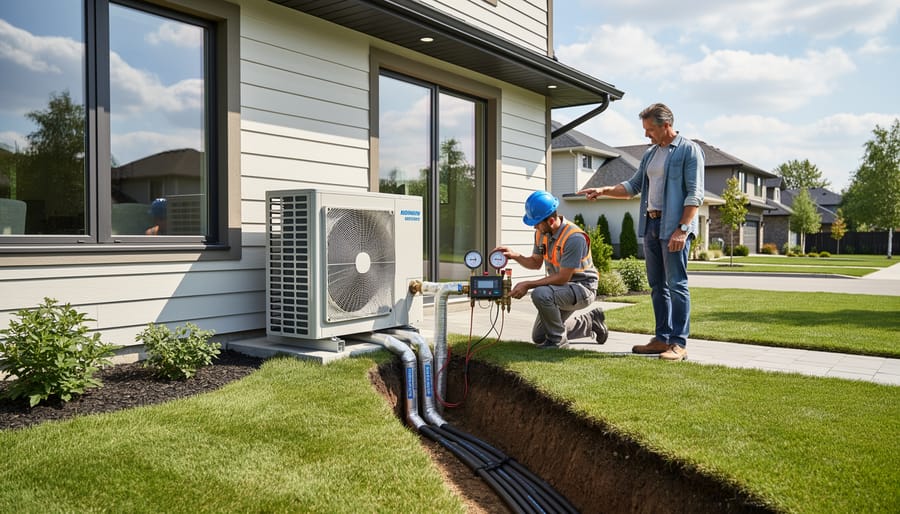
The Ground Loop System
The ground loop system forms the foundation of a geothermal heat pump installation, serving as the critical interface between your building and the earth’s constant temperature below the frost line. This network of buried pipes, typically made from high-density polyethylene, circulates a water-based solution that absorbs heat from the ground during winter and deposits heat back into the ground during summer.
The loop configuration depends on your property’s characteristics and available space. In horizontal systems, installers lay pipes in trenches several feet deep, running parallel across your yard. These loops need adequate land area but work well for new construction where excavation is already planned. The fluid circulating through these pipes picks up thermal energy as it passes through the warmer earth in winter, carrying that heat back to the indoor unit for concentration and distribution.
The earth acts as a thermal battery here. Below the frost line, ground temperatures remain relatively stable year-round, making the exchange process efficient regardless of outdoor air temperature. This stability is what allows geothermal systems to outperform traditional heating and cooling equipment that must work against extreme air temperatures.
The Heat Pump Unit
The heat pump unit sits inside your building, typically in a mechanical room or basement, and does the actual work of concentrating and moving thermal energy where you need it. Think of it as the system’s engine: the ground loop delivers relatively stable earth-temperature fluid, and this indoor unit amplifies that energy to create usable heating or cooling.
At the core is a refrigerant circuit, similar to what you’d find in a conventional air conditioner or refrigerator but adapted to work with ground-source temperatures. The unit contains a compressor that pressurizes refrigerant to raise its temperature, a heat exchanger where energy transfers between the refrigerant and your building’s air or water distribution system, and an expansion valve that reverses the process for cooling mode. A reversing valve lets the system switch between heating and cooling by changing the direction of refrigerant flow.
Unlike furnaces that burn fuel to generate heat, the heat pump simply moves existing thermal energy from one place to another, concentrating it through the compression cycle. This transfer process requires electrical input to run the compressor and fans, but the energy moved is typically several times greater than the electricity consumed. The unit connects to your building’s existing ductwork or radiant floor system to distribute conditioned air or heated water throughout the space, making integration with standard HVAC infrastructure straightforward for most commercial and residential applications.
Types of Geothermal Heat Pump Systems
Horizontal Ground Loop Systems
Horizontal ground loop systems represent the most widely installed configuration for residential geothermal heat pumps, particularly in suburban and rural settings where adequate land is available. This approach involves laying pipes in trenches four to six feet deep, running parallel across the property in either a single-layer or stacked arrangement depending on space constraints.
The main advantage lies in installation simplicity. Trenching equipment is readily available and the work requires less specialized expertise than vertical drilling, which can make the process more accessible in areas without established geothermal contractors. However, these systems demand substantial yard space, often requiring an area significantly larger than the home’s footprint to accommodate the necessary loop length.
Soil conditions matter considerably. The ground loop exchanges heat with the surrounding earth, so soil composition, moisture content, and thermal conductivity all influence system performance. Sandy or dry soils may require longer loops to achieve the same capacity as moist, dense soils.
For investors evaluating market potential, horizontal systems dominate the single-family residential segment where lot sizes permit installation. Understanding this configuration helps assess which property types and geographic markets offer the strongest adoption prospects for geothermal technology.
Vertical Ground Loop Systems
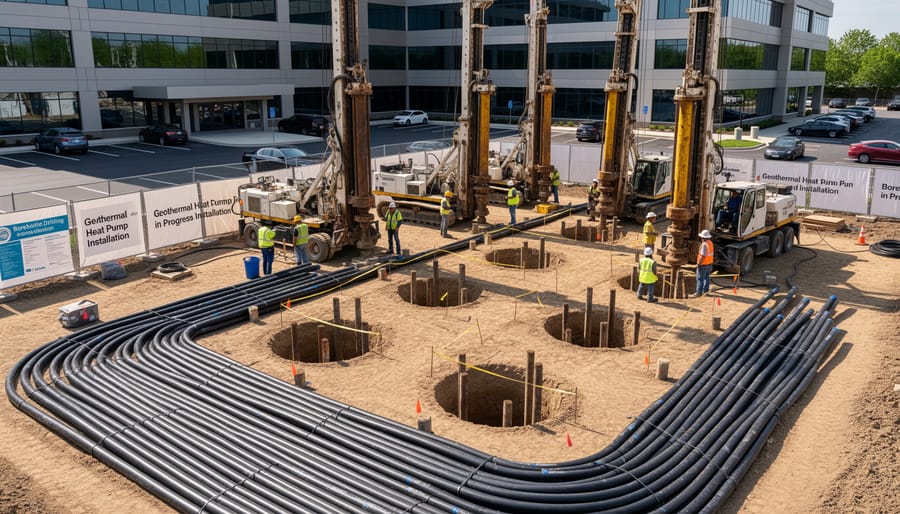
Vertical ground loop systems drill boreholes 100 to 400 feet deep, making them ideal when surface area is limited. This configuration is particularly common in commercial buildings, schools, and dense urban developments where horizontal trenching isn’t feasible.
The drilling process is more specialized than horizontal installation, requiring equipment and expertise that can affect project timelines. However, the compact footprint allows installation in parking lots, under buildings, or in small yards, expanding where geothermal technology can be deployed.
These systems typically use multiple boreholes arranged in a grid pattern, with the number depending on the building’s heating and cooling requirements. The vertical configuration also accesses more stable ground temperatures at greater depths, which can enhance system efficiency in certain climates.
For investors evaluating commercial geothermal projects, vertical systems often represent a larger portion of institutional and multi-unit installations where space constraints make horizontal loops impractical. The specialized nature of vertical drilling has also created opportunities in the drilling services and equipment sectors supporting this market segment.
Pond and Open-Loop Systems
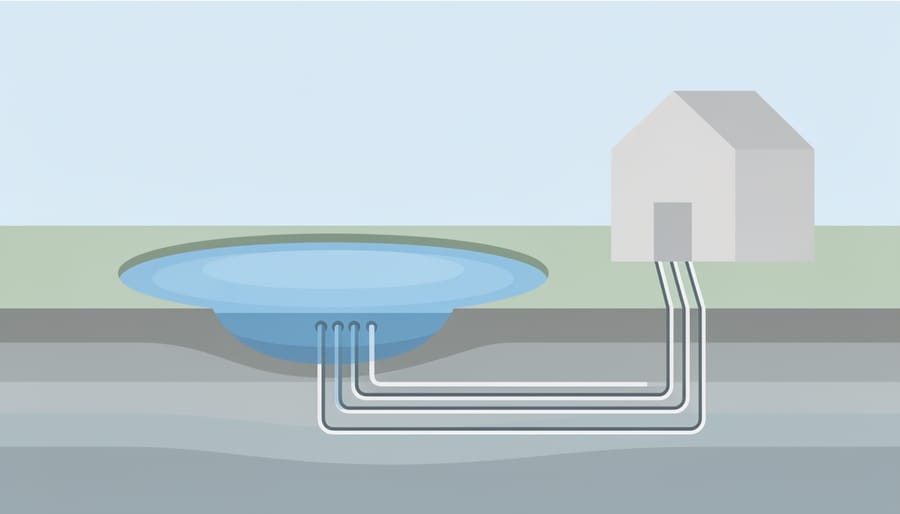
Pond and open-loop systems draw heat directly from water sources rather than using closed underground pipes. A pond system runs a coil of pipe underwater, extracting heat from a body of water that stays above freezing year-round and maintains sufficient depth. Open-loop systems pump groundwater from a well, extract its heat, then discharge the water back into the ground or surface water. These configurations can offer installation cost advantages when suitable water sources exist onsite, but they come with regulatory hurdles. Open-loop systems require permits for water withdrawal and discharge, and water quality matters since minerals or sediment can clog heat exchangers. Pond systems need a water body large enough and deep enough to maintain stable temperatures. For investors, these systems represent niche opportunities in specific geographies where water availability and regulatory frameworks align, rather than the broadly applicable residential market that horizontal and vertical systems address.
Where Geothermal Heat Pumps Are Being Deployed
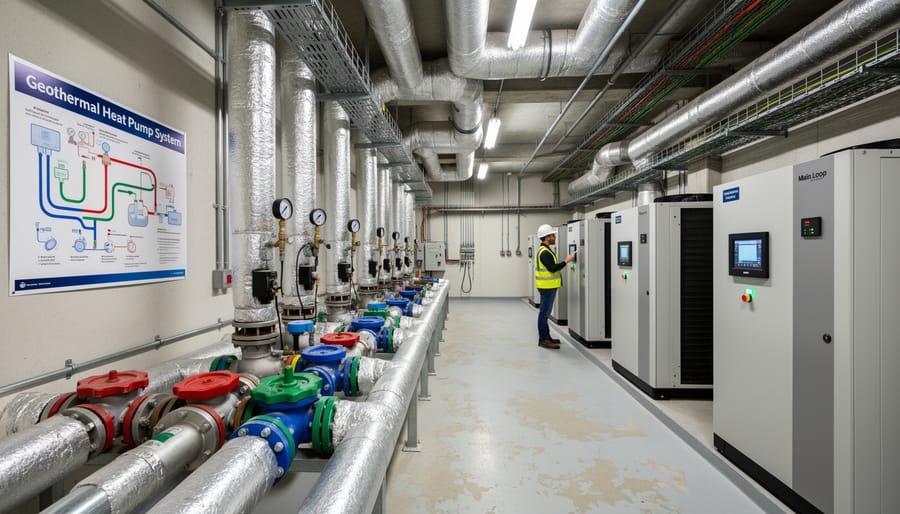
Geothermal heat pumps have found their way into a diverse range of buildings and settings, with adoption patterns shaped by building size, site characteristics, and regional climate policies. Understanding where these systems are actually being installed helps investors identify which market segments show the strongest demand and where future growth opportunities may emerge.
The residential sector represents the largest deployment area, particularly in regions with supportive policies or high conventional energy costs. Single-family homes in suburban and rural areas often have the land needed for horizontal loop installations, making them natural candidates for the technology. New construction projects increasingly incorporate geothermal systems during the design phase, avoiding the retrofit challenges that can complicate installation in existing buildings. Multi-family developments and planned communities have also begun adopting the technology, sometimes using shared ground loop fields that serve multiple units.
Commercial and institutional applications are expanding across several key sectors:
- Schools and universities seeking to reduce long-term operating costs and meet sustainability goals
- Office buildings and commercial real estate where stable heating and cooling costs improve tenant value
- Healthcare facilities requiring reliable climate control and lower energy intensity
- Municipal buildings and government facilities responding to renewable energy mandates
- Industrial facilities with substantial heating or cooling needs where efficiency gains compound savings
Geographic adoption varies considerably based on electricity costs, climate extremes, and local incentive programs. Northern climates with significant heating loads see strong residential adoption, while commercial deployments span diverse regions where total energy costs justify the upfront investment. Coastal areas, college towns, and municipalities with aggressive climate action plans often show concentrated activity.
The vertical loop configuration has opened urban markets where horizontal installations wouldn’t fit, allowing commercial buildings in dense areas to access geothermal technology. This expansion beyond the suburban and rural settings that dominated early adoption signals a broadening market that investors should monitor closely.
The Investment Case for Geothermal Heat Pumps
Several converging trends make geothermal heat pumps compelling for alternative energy investing in 2026. The technology sits at the intersection of decarbonization policy, building electrification, and energy cost mitigation, creating multiple drivers that reinforce rather than depend on a single market factor.
Policy frameworks increasingly favor ground-source heat pump adoption. Building codes in various jurisdictions now restrict fossil fuel heating in new construction, while retrofit mandates for existing buildings create a substantial addressable market. Federal and state-level incentive programs have expanded beyond simple rebates to include tax credits that reduce upfront costs for both residential and commercial installations. This regulatory backdrop differs from temporary stimulus measures because it reflects structural policy commitments to emissions reduction targets extending through 2030 and beyond.
Energy cost dynamics strengthen the economic case. Geothermal systems provide hedge value against volatile natural gas and heating oil prices because they rely primarily on stable electricity costs and require significantly less energy input than conventional heating and cooling. As utilities expand renewable electricity generation, the carbon intensity of operating these systems continues declining even without equipment upgrades. This makes them attractive to institutional property owners managing long-term operating budgets and sustainability commitments.
The broader electrification trend creates tailwinds. As transportation, heating, and industrial processes shift from direct fossil fuel combustion to electricity, demand grows for efficient electric heating and cooling solutions. Geothermal heat pumps offer substantially higher efficiency than resistance heating or standard air-source equipment, making them natural beneficiaries of grid modernization and renewable energy expansion. Commercial real estate developers increasingly specify these systems to meet green building certifications and tenant expectations.
Infrastructure considerations matter for investors evaluating market development. The specialized drilling, installation, and maintenance skills required create barriers to entry that support pricing discipline among established providers. Supply chain maturation for ground loop materials, heat pump components, and monitoring systems indicates growing scale, while installer training programs expand capacity to meet demand. These infrastructure developments suggest the market is moving beyond early adoption into broader commercial viability, creating opportunities across manufacturing, installation, and service segments.
Economic Considerations for Adoption
Understanding the economic factors behind geothermal heat pump adoption helps investors evaluate both the technology’s market potential and the decision-making process that end users face when considering installation.
The upfront cost represents the most significant barrier to adoption. A geothermal heat pump system requires substantial initial investment compared to conventional HVAC equipment. Installation involves drilling or excavating for the ground loop, purchasing the heat pump unit itself, and connecting everything to a building’s existing heating and cooling distribution system. The total expense varies widely depending on property characteristics, system type, local labor rates, and soil or rock conditions at the installation site.
Several factors drive this cost variability. Vertical systems typically cost more than horizontal configurations because drilling boreholes requires specialized equipment, but they work well on smaller lots where trenching isn’t feasible. Soil composition affects excavation difficulty. Existing ductwork can be adapted in many cases, reducing conversion costs, while buildings without forced-air systems may need additional infrastructure.
From an operational perspective, geothermal heat pumps offer compelling advantages. They consume substantially less electricity than traditional heating and cooling systems because they move heat rather than generate it through combustion or electric resistance. This efficiency translates to lower monthly utility bills, though the magnitude of savings depends on local electricity rates, climate, and what heating fuel the system replaces. Properties switching from propane or oil heat generally see larger operating cost reductions than those replacing natural gas.
The payback calculation balances upfront investment against ongoing savings. Property owners in colder climates with high heating demands typically recover costs faster than those in mild regions. Government incentives can dramatically shorten payback periods by reducing net installation costs through tax credits, rebates, or grants. These policy mechanisms also influence investor returns in companies producing or installing the systems.
For investors tracking alternative energy stocks understanding these economics matters because adoption rates directly affect manufacturer and installer revenue growth. Companies that reduce installation complexity or integrate geothermal systems with complementary technologies like battery technology may capture larger market share as the sector matures. The economics become more favorable as installation expertise spreads and equipment costs decline through scale.
Companies and Sectors to Watch in 2026
The geothermal heat pump industry spans several interconnected sectors, creating multiple entry points for investors examining investment trends 2026. Rather than focusing on individual stock picks, understanding the broader landscape helps investors identify where value might emerge as adoption accelerates.
Equipment manufacturers form the core of this market. Companies producing heat pumps, ground loop components, and control systems range from established HVAC giants incorporating geothermal lines into their product portfolios to specialized manufacturers focused exclusively on ground-source technology. Several publicly traded diversified building equipment firms now offer geothermal products alongside traditional heating and cooling systems, providing exposure without single-technology risk.
The installation and service sector represents another significant opportunity. While most geothermal installation work happens through regional contractors rather than publicly traded chains, some larger mechanical services companies and home improvement retailers are expanding into this space. These businesses benefit from growing installation demand without bearing manufacturing risk.
Infrastructure and drilling providers supporting ground loop installation form a third category. Companies offering drilling equipment, specialized piping, and excavation services see increased demand as geothermal systems proliferate. Some operate in the water well or conventional geothermal power sectors but increasingly serve the heat pump market.
Component suppliers including circulation pumps, refrigerants, heat exchangers, and control systems create additional portfolio opportunities. These companies often serve multiple markets beyond geothermal, providing diversification.
For investors evaluating this space, watch for companies demonstrating scale in manufacturing, distribution reach, service networks, and technology development. Firms with established HVAC credentials entering geothermal may execute faster than pure-play startups, though specialized manufacturers might capture premium positioning. Geographic presence matters too, as certain regions show stronger adoption patterns.
Rather than chasing narrow exposure, consider how geothermal heat pumps fit within broader renewable energy and building efficiency themes. Many investors gain exposure through diversified clean energy funds or building technology companies with geothermal components in their mix.
Common Questions About Geothermal Energy Investment
Do geothermal heat pumps work in all climates?
Yes, they function effectively in virtually any climate because ground temperature remains relatively stable year-round a few feet below the surface, whether you’re in Minnesota or Arizona. The technology extracts heat from the ground in winter and deposits it there in summer, regardless of outdoor air temperature.
Is this technology proven, or am I investing in something experimental?
Geothermal heat pump technology has been commercially available since the 1970s and is considered mature, with hundreds of thousands of systems installed globally. The investment question isn’t about whether the technology works, but rather about market adoption rates and the companies positioned to capture that demand.
How does investing in geothermal heat pumps compare to solar energy opportunities?
Solar has seen faster market growth and broader public awareness, but geothermal heat pumps offer exposure to heating and cooling markets that solar doesn’t address directly. Some investors view them as complementary rather than competing opportunities within the renewable energy transition.
What policy risks should I consider?
Tax credits and incentives that support adoption can change with political shifts, potentially affecting installation rates. However, rising energy costs and stricter building efficiency standards create underlying demand that’s less dependent on subsidies than early renewable technologies were.
Beyond these common concerns, investors often wonder about practical entry points into this market. If you’re interested in geothermal heat pump opportunities but don’t want to pick individual stocks, consider broader clean energy funds that include HVAC manufacturers and renewable technology companies in their holdings. This approach gives you exposure while spreading risk across the sector.
For those comfortable with more targeted investments, look at companies that manufacture heat pump equipment, provide installation services, or supply related infrastructure like drilling equipment. Publicly traded manufacturers with established HVAC businesses offer a more conservative path than pure-play startups. Research their revenue sources to understand how much of their business actually comes from geothermal versus traditional HVAC systems.
The market faces real challenges that temper enthusiasm. Installation requires specialized contractors who remain scarce in many regions, potentially limiting how quickly residential adoption can scale. Upfront costs are substantial compared to conventional systems, even with incentives. And while operating efficiency is attractive, the economic case varies significantly based on local electricity rates, existing heating fuel costs, and property characteristics.
What makes this interesting for 2026 isn’t a guarantee of explosive growth, but rather the convergence of factors that suggest steady expansion: electrification trends pushing away from fossil fuel heating, technology improvements making installations less disruptive, and growing contractor expertise in more markets. Investors approaching this space should think in terms of gradual market penetration rather than rapid transformation.
Geothermal energy represents a compelling intersection of environmental sustainability and investment opportunity, with heat pump technology serving as the bridge between abundant underground thermal resources and practical building applications. For investors exploring alternative energy, this technology offers exposure to a market driven by multiple reinforcing trends: regulatory pressure to reduce building emissions, rising conventional energy costs, and growing consumer awareness of efficient heating and cooling solutions.
The investment case rests on several observable factors. Government incentives in many regions support installation costs, making adoption more accessible. The technology itself is mature and proven, reducing technology risk compared to emerging renewable sectors. Manufacturing, installation, and service businesses all participate in the value chain, creating diverse entry points for capital.
However, successful investment requires understanding the nuances. Installation costs vary significantly by site conditions and system type. Market penetration differs by geography based on climate, geology, and policy environments. The longer installation timeline and higher upfront investment compared to conventional HVAC systems affect adoption rates in price-sensitive markets.
For those new to alternative energy investing, geothermal heat pumps provide an accessible starting point to understand how efficiency technologies create value. The principles here apply across the renewable sector: identifying policy tailwinds, evaluating cost structures, and recognizing market adoption patterns.
We encourage you to continue exploring this opportunity. Engage with our community forums to share insights and learn from fellow investors tracking geothermal developments. Follow company announcements, policy changes, and installation trends in your region. Alternative energy investment rewards those who combine careful research with ongoing market awareness, and geothermal heat pump technology offers a practical focus for that disciplined approach.