
X Energy News: Major Nuclear Fuel and Reactor Developments to Watch in 2026
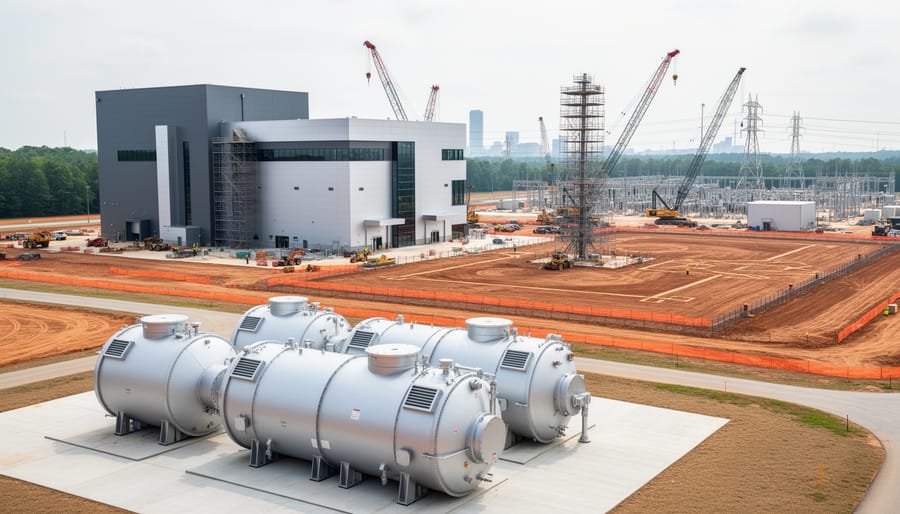
X-energy is accelerating small modular reactor commercialization through construction milestones, strategic supply agreements, and fuel fabrication advances that position the company at the forefront of America’s nuclear energy renaissance. In the past three months alone, the Oak Ridge facility has broken ground on a 70-acre expansion, secured HALEU fuel supply partnerships, and moved its TRISO-X fuel production to the next construction phase, signaling a shift from development to deployment that’s catching the attention of investors tracking alternative energy stocks.
For those monitoring SMR sector developments, X-energy’s recent activity represents more than routine corporate updates. The company is solving critical fuel supply bottlenecks that have stalled competitors, expanding manufacturing capacity for nuclear-grade graphite with SGL Carbon, and joining AI-accelerated deployment initiatives through Project Prometheus. These moves address the fundamental infrastructure gaps that separate reactor designs on paper from operational power plants feeding the grid.
Whether you’re evaluating nuclear exposure in your portfolio or simply tracking the companies positioned to meet rising baseload power demand, understanding X-energy’s current trajectory offers insight into which advanced reactor developers are moving beyond promises toward commercial reality.
Major Developments Shaping X-Energy’s 2026 Growth
X-energy’s aggressive expansion throughout 2026 represents a pivotal moment for investors tracking the advanced nuclear sector. The company isn’t just developing small modular reactor (SMR) technology, it’s building the entire industrial ecosystem needed to deploy it at scale. From fuel fabrication facilities to upstream material partnerships, these developments signal that SMRs are moving from pilot projects to commercial reality, a transition that typically creates substantial opportunities for early-positioned investors.
The investment landscape context matters here. Utilities and data centers are scrambling for carbon-free baseload power that doesn’t depend on weather conditions. Wind and solar have captured headlines, but they can’t run 24/7 without massive battery storage. Advanced nuclear fills that gap, offering firm capacity that complements intermittent renewables rather than competing with them. When a company like X-energy secures its fuel supply chain and expands production facilities simultaneously, it’s demonstrating execution capability that separates contenders from pretenders in the race to commercialize next-generation nuclear technology.
What makes 2026 particularly significant is the convergence of funding, partnerships, and physical infrastructure. X-energy isn’t announcing vaporware, it’s pouring concrete, signing supply contracts, and partnering with national laboratories. For investors evaluating alternative energy plays, this operational momentum provides tangible checkpoints to assess whether SMR deployment timelines are realistic or perpetually five years away.
1. TRISO-X Fuel Facility Construction Advances and Campus Expansion

X-energy’s fuel fabrication subsidiary TRISO-X reached a pivotal construction milestone on August 24, when it advanced to the next phase of construction for its TX-1 fuel fabrication facility at the Oak Ridge Nuclear Fuel Campus in Tennessee. This facility will produce TRISO (TRi-structural ISOtropic) fuel particles, the specialized fuel pellets designed for X-energy’s Xe-100 small modular reactor, marking a critical step from design blueprints to physical manufacturing capacity.
The construction progress arrives alongside a substantial campus expansion. On August 4, TRISO-X announced a 70-acre expansion of the Oak Ridge site, more than doubling the footprint available for fuel production infrastructure. This expansion is backed by tangible state support: on July 15, Tennessee awarded TRISO-X a grant specifically earmarked to support the campus expansion, signaling state-level confidence in the economic and energy security benefits of hosting advanced nuclear fuel production.
- TX-1 facility advanced to next construction phase (August 24)
- 70-acre campus expansion announced, doubling production footprint (August 4)
- Tennessee grant awarded to support facility buildout (July 15)
- Timeline moving from design phase toward operational fuel fabrication capacity
For alternative energy investors, these developments address one of the most persistent bottlenecks in SMR commercialization: fuel supply. Advanced reactors cannot deploy at scale without a reliable, domestic source of specialized fuel. Unlike conventional nuclear fuel, TRISO particles have a unique structure that contains fission products within layers of carbon and ceramic, enabling safer operation and higher temperatures. Currently, no commercial-scale TRISO fuel production exists in the United States, making the TX-1 facility a first-mover advantage for X-energy and a de-risking event for its Xe-100 reactor pipeline.
The expansion also signals investor confidence in demand. You don’t acquire 70 additional acres and secure state grants unless projections show multi-reactor fuel requirements ahead. As utilities and data centers evaluate SMRs for carbon-free baseload power, the ability to point to a functioning, scalable fuel fabrication facility becomes a competitive differentiator. Construction phase progression means X-energy is moving from promises to physical assets, exactly the kind of execution milestone investors track when assessing commercialization timelines and supply chain readiness.
2. Strategic Fuel Supply and Material Partnerships Secured

X-energy locked down two critical supply agreements in early August that tackle what have historically been the most stubborn bottlenecks in advanced nuclear deployment: fuel enrichment and structural materials. On August 6, the company signed a HALEU supply agreement with Centrus Energy to secure High-Assay Low-Enriched Uranium for its Xe-100 reactor. Three days earlier, on August 3, X-energy announced a capacity expansion partnership with SGL Carbon to scale production of nuclear-grade graphite, the structural material essential to TRISO fuel pebbles and reactor cores.
The Centrus agreement matters because it represents one of the first commercial HALEU offtake contracts between a U.S. enricher and an SMR developer, signaling that the fuel supply chain is moving from demonstration to scalable production. For investors, this reduces execution risk: you can’t commercialize a reactor if you can’t fuel it, and HALEU scarcity has delayed multiple advanced nuclear projects industry-wide. The partnership with SGL Carbon addresses a parallel constraint, nuclear-grade graphite production is concentrated in a handful of suppliers globally, and scaling capacity takes years. By securing expanded graphite supply now, X-energy is de-risking its fuel fabrication timeline at the Oak Ridge campus.
These partnerships shift X-energy’s risk profile from “can they build it?” to “how fast can they scale?” Both HALEU and graphite are long-lead-time materials, meaning delays cascade through project schedules. Locking in supply before production ramps is standard practice in capital-intensive industries, but it’s particularly critical in nuclear, where regulatory and technical timelines leave zero margin for material shortages. Investors tracking SMR commercialization should view these agreements as proof that X-energy is building a vertically integrated fuel supply chain, a competitive advantage if demand for firm, carbon-free power accelerates as expected.
3. Research Partnerships and AI-Driven Deployment Initiatives

On August 11, X-energy’s fuel subsidiary TRISO-X extended its research partnership with Oak Ridge National Laboratory, deepening collaboration on advanced nuclear fuel development. This extension builds on previous joint work advancing TRISO (tri-structural isotropic) fuel technology, which is designed to withstand extreme temperatures and provide enhanced safety margins compared to conventional fuel rods. For investors, the Oak Ridge partnership signals continued government-backed R&D support and access to world-class testing facilities, critical for validating fuel performance data that regulators and utilities will scrutinize before commercial deployment.
One month earlier, on July 22, X-energy joined Project Prometheus, an initiative focused on AI-accelerated deployment of advanced nuclear reactors. While specifics of X-energy’s role weren’t detailed in the announcement, Project Prometheus typically applies machine learning to optimize reactor design, streamline licensing processes, and improve construction efficiency. The initiative reflects a broader industry shift: utilities and tech companies are exploring AI to address the long timelines and high capital costs that have historically plagued nuclear projects. X-energy’s participation positions the company alongside peers pushing the envelope on digital tools for faster, more cost-effective SMR rollouts.
These partnerships matter because they place X-energy at the convergence of two investment themes, advanced nuclear baseload power and AI-driven energy infrastructure optimization. As data centers and industrial facilities demand reliable, carbon-free electricity, the ability to deploy reactors faster and with proven fuel becomes a competitive advantage. Investors should watch for tangible outcomes: peer-reviewed fuel test results from Oak Ridge, AI-enabled design improvements that compress construction schedules, and whether these collaborations translate into accelerated Xe-100 deployment timelines or new customer commitments.
4. First Quarter 2026 Financial Results and Investor Outlook
On June 4, 2026, X-energy released its first quarter results, providing investors with a critical checkpoint to assess whether the company’s operational momentum matches its ambitious expansion announcements. While specific revenue figures weren’t disclosed in public summaries, investors typically scrutinize several key performance indicators when evaluating advanced nuclear companies like X-energy.
Cash runway remains paramount for pre-revenue SMR developers. Investors watch burn rate against available capital to gauge how long the company can sustain operations before requiring additional financing. Given the capital-intensive nature of nuclear facility construction and regulatory compliance, quarterly cash position updates signal whether X-energy can fund its TRISO-X facility through to commercial fuel production.
Project pipeline progress offers another vital metric. For X-energy, this means tracking Xe-100 reactor customer commitments, site selection timelines, and licensing milestones with the Nuclear Regulatory Commission. Each customer Letter of Intent or engineering design advancement de-risks the commercialization pathway that distinguishes successful alternative energy investing from speculative ventures.
Government contract updates carry particular weight in the advanced nuclear sector. Department of Energy cost-share agreements, loan guarantees under existing programs, or new appropriations directly impact both funding and credibility. These partnerships validate technical feasibility and accelerate deployment timelines that private capital alone cannot achieve.
Unlike battery technology investments with shorter commercialization cycles, SMR development demands patient capital and milestone-driven analysis. The first quarter report serves as a reality check against the August facility announcements and partnership wins.
Why X-Energy’s Progress Matters for Alternative Energy Investors
X-energy’s 2026 progress marks a pivotal moment for alternative energy investors: we’re witnessing the shift from advanced nuclear reactor concepts to tangible commercial infrastructure. The company’s facility expansions, secured fuel supply agreements, and strategic partnerships demonstrate that small modular reactors are no longer speculative technology, they’re entering the deployment phase. This transition matters because utilities and data centers urgently need carbon-free baseload power that can operate 24/7, regardless of weather conditions. While solar and wind have driven tremendous growth in clean energy capacity, they require backup power or massive battery storage to address intermittency. Nuclear SMRs solve this problem by providing reliable, continuous output that complements renewable generation rather than competing with it.
The broader market trend underscores this urgency. Utilities face mounting pressure to retire coal plants while maintaining grid stability, and data centers are doubling down on carbon-neutral commitments as AI workloads push electricity demand to unprecedented levels. X-energy’s Xe-100 reactor and TRISO fuel technology directly address this need, offering modular deployment that can scale to match demand without the decade-long construction timelines of traditional nuclear plants. For investors tracking portfolio reshaping opportunities in the alternative energy sector, several factors warrant close attention:
- Regulatory pathways: NRC licensing approval timelines remain critical gating factors for commercial deployment
- Competitive positioning: how X-energy’s TRISO fuel technology differentiates from competing SMR designs like NuScale or TerraPower
- Customer pipeline: signed commitments from utilities or industrial users signal genuine market demand beyond government-funded demonstrations
- Timeline to revenue: converting partnerships and construction milestones into actual reactor sales and fuel supply contracts
The convergence of decarbonization mandates, grid reliability concerns, and maturing SMR technology creates a compelling investment landscape. X-energy’s tangible progress in fuel fabrication capacity and material supply chains de-risks a key bottleneck that has long hindered advanced nuclear deployment, making this development phase particularly significant for investors evaluating long-term positioning in carbon-free energy infrastructure.
What to Watch Next in X-Energy’s Development
As X-energy’s 2026 developments unfold, several key milestones will signal whether the company can deliver on its commercialization roadmap. Investors should track tangible progress at the Oak Ridge Nuclear Fuel Campus, where the 70-acre expansion sets the stage for scaled TRISO fuel production. Watch for construction completion dates for the TX-1 facility and announcements of initial fuel output, actual fuel in hand will validate years of R&D investment.
Xe-100 reactor customer announcements represent another critical indicator. While X-energy has secured design and development contracts, firm commitments from utilities or industrial partners for operational reactors would mark a major de-risking event. Pay attention to Department of Energy funding announcements, particularly loan guarantees through programs like the Advanced Reactor Demonstration Program, which can accelerate deployment timelines and improve project economics.
NRC licensing progress matters enormously. The Xe-100 design certification process moves through defined stages; any updates indicating the reactor clearing regulatory hurdles, or encountering delays, will directly impact commercialization schedules and investor confidence.
Beyond monitoring these milestones, connect with fellow investors tracking the SMR sector. The Dforce Solar platform offers a space to discuss X-energy’s developments alongside broader alternative energy trends. Share your insights on how advanced nuclear fits into diversified clean energy portfolios, compare SMR investment opportunities, and learn from others navigating this emerging market. The transition from pilot projects to commercial deployment rarely follows a straight path, staying engaged with a knowledgeable community helps you interpret each development’s true significance.
Frequently Asked Questions About X-Energy and SMR Investment
What is X-energy’s core technology and how does it work?
X-energy develops the Xe-100, a small modular reactor that uses TRISO (TRi-structural ISOtropic) particle fuel, tiny, highly durable fuel kernels coated in protective layers of carbon and ceramic. Unlike traditional fuel rods, TRISO fuel can withstand extreme temperatures without melting or releasing radiation, making it inherently safer and enabling simpler reactor designs.
How does X-energy’s SMR differ from traditional nuclear power plants?
Small modular reactors like the Xe-100 are factory-built, transportable units that can be deployed faster and more flexibly than conventional gigawatt-scale reactors. They operate at lower pressures, require less water for cooling, and can be sited closer to end users, making them attractive for industrial facilities, data centers, and remote locations where traditional plants aren’t economically viable.
What are realistic commercialization timelines for X-energy’s reactors?
X-energy is currently advancing fuel fabrication capabilities at its Oak Ridge campus, with the TX-1 facility moving to the next construction phase in August 2026. Full commercial deployment depends on completing NRC licensing, finishing fuel production facilities, and securing utility or industrial customers, processes that typically span several years, making mid-to-late 2020s the earliest realistic timeframe for first operational units.
Can individual investors buy X-energy stock, and what are the key risks?
X-energy merged with a SPAC and trades publicly, allowing individual investors to participate. Key risks include regulatory delays (NRC approval processes are lengthy and unpredictable), construction cost overruns at fuel facilities, competition from other SMR developers, and execution risk in scaling from demonstration to commercial production, challenges common to capital-intensive infrastructure projects in emerging technology sectors.
Understanding these fundamentals helps investors evaluate whether X-energy’s recent facility expansions, material partnerships, and research collaborations translate into genuine commercial progress. The August 2026 announcements around fuel supply agreements with Centrus for HALEU and capacity expansion with SGL Carbon for nuclear-grade graphite address critical supply chain bottlenecks that previously slowed SMR deployment. For novice investors, it’s worth noting that advanced nuclear sits at the intersection of decarbonization goals and grid reliability needs, utilities and data centers increasingly seek carbon-free baseload power that renewables alone can’t provide. Experienced investors should watch for customer announcements and DOE funding decisions as the clearest near-term catalysts, since these validate both market demand and government support for the technology. The sector remains speculative, but X-energy’s progress in securing upstream materials and advancing construction suggests the company is methodically building the infrastructure needed for commercial-scale operations.
X-energy’s 2026 developments mark a pivotal year for advanced nuclear commercialization. The company’s progress across multiple fronts, from the TRISO-X fuel fabrication facility breaking ground and securing a 70-acre campus expansion to locking in critical HALEU supply and nuclear-grade graphite partnerships, demonstrates that small modular reactors are moving from concept to reality. For investors tracking the alternative energy sector, these milestones signal genuine momentum in building the infrastructure necessary for widespread SMR deployment.
The strategic partnerships with Centrus, SGL Carbon, and Oak Ridge National Laboratory, combined with X-energy’s involvement in AI-accelerated deployment initiatives, position the company at the forefront of a technology that could transform baseload power generation. As utilities and data centers increasingly seek carbon-free, reliable electricity, the advanced nuclear sector deserves a place in your investment research.
Stay engaged with the Dforce Solar community to track ongoing X-energy announcements, regulatory approvals, and commercial timelines. Share your insights, ask questions, and connect with fellow investors who are navigating this evolving landscape. The advanced nuclear story is unfolding now, and informed participation starts with staying current on the companies making it happen.