What Really Drives Producing Wind Energy (And What It Means for Your Portfolio)
Producing wind energy comes down to one idea: moving air spins turbine blades, the blades turn a generator, and the generator converts that motion into…
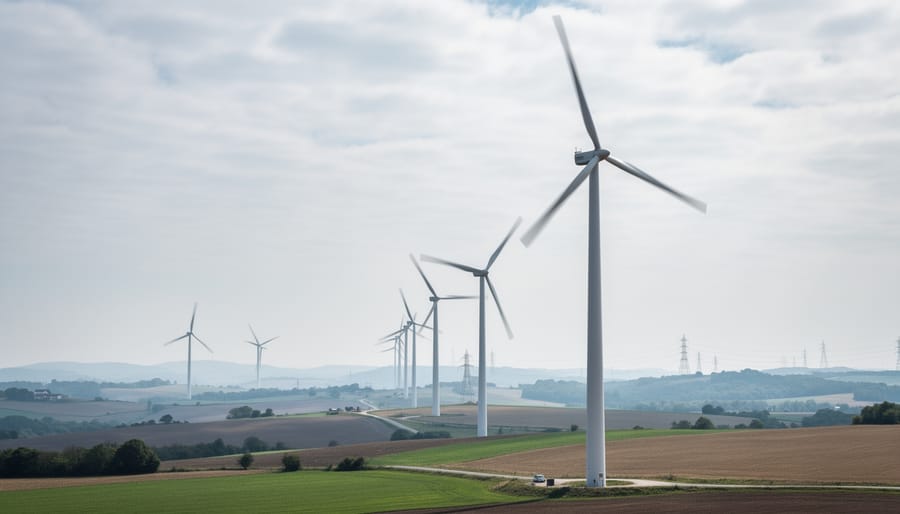
Producing wind energy comes down to one idea: moving air spins turbine blades, the blades turn a generator, and the generator converts that motion into electricity you can feed to the grid. No fuel is burned and no steam is raised. A turbine’s output depends on wind speed, blade length, and how well the site matches the machine, and because power scales with the cube of wind speed, a modest increase in breeze can lift output dramatically.
That physics explains why some wind farms generate steady returns while others underperform. Site selection, turbine height, grid access, and maintenance all shape how much power a project actually delivers, usually measured as capacity factor, the share of maximum possible output a turbine achieves over time. For investors, that single metric connects the mechanics to the money.
Wind isn’t without trade-offs. Output varies with the weather, transmission lines can lag behind new capacity, and traditional power plants still provide the steady baseload that grids rely on. Understanding both sides gives you a clearer read on where wind fits.
In this article, we’ll walk through how turbines work in plain terms, what drives productive generation, and how those factors translate into investment value. Beginners will get a solid foundation, and experienced investors will find the market trends and metrics worth tracking. Have your own questions about wind projects or the sector? Bring them to our community discussion, where readers compare notes and sharpen their thinking together.
How Wind Becomes Electricity: The Basics
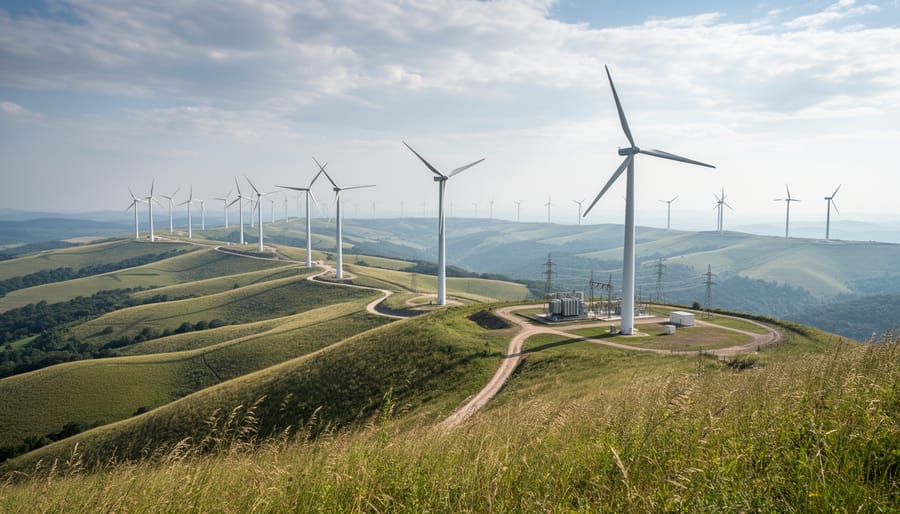
Inside a Modern Wind Turbine
A modern utility-scale wind turbine looks simple from the road, but each part has a specific job. Knowing them helps you judge why one project outperforms another.
The rotor is the spinning assembly at the front: usually three long blades attached to a central hub. Blades are shaped like airplane wings, so moving air creates lift and turns the rotor. Many blades can also pitch, meaning they rotate slightly on their axis to catch more wind in light breezes or shed it in storms.
Behind the hub sits the nacelle, the housing at the top of the tower. It holds the drivetrain, generator, brakes and electronics. The tower itself matters more than it seems, because wind speeds rise with height, and taller towers reach steadier, stronger air.
Control systems tie it all together. Sensors track wind speed and direction, and the turbine’s yaw system rotates the whole nacelle to face the wind while the pitch system adjusts the blades. This is where much of the efficiency is won or lost.
Here is the path energy takes from air to electrical system:
- Wind strikes the blades, creating lift that makes the rotor turn, typically at a slow 10 to 20 revolutions per minute.
- The rotor shaft carries that slow, high-torque rotation into the nacelle.
- A gearbox speeds the rotation up to the rate the generator needs. Direct-drive designs skip the gearbox entirely, which can mean fewer moving parts to maintain.
- The generator converts the spinning motion into electricity using magnets and copper windings.
- A transformer, often at the tower base, raises the voltage so power can travel with less loss.
- Cables send that power to a collection point, where it enters the transmission network and heads to the grid.
Each step loses a little energy, so reliability and smart design at every stage add up to meaningful differences in output.
From Turbine to Grid
A turbine’s generator doesn’t produce electricity that’s ready for the grid. The raw output varies with wind speed, so power electronics, usually converters and inverters, condition it into a steady frequency and voltage that matches the grid’s requirements. Without that step, the power would be unusable.
Next comes the step-up. Electricity from a turbine is typically generated at a relatively low voltage, so a transformer, often at the base of the tower or inside the nacelle, raises it. Cables then collect power from many turbines and carry it to a project substation, where it’s stepped up again to high voltage. Higher voltage means less energy lost as heat over long distances, which is why the whole system is built this way.
From the substation, power travels over transmission lines to where people actually use it. Here’s where real-world output gets decided. A turbine can be perfectly designed and sit in a great wind corridor, but if the local grid is congested or the line can’t handle more power, operators may have to ask the project to scale back. That’s called curtailment, and it means available wind goes unused.
For investors, this is a key point: a project’s results depend on its connection and nearby transmission capacity just as much as on the turbine hardware.
The Factors That Make Wind Generation Productive
Wind Resource and Site Selection
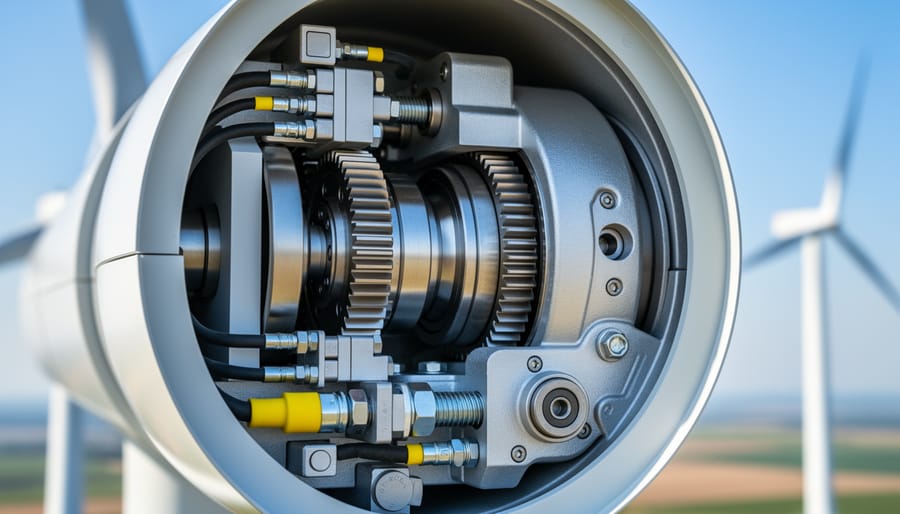
Before a single turbine goes up, developers spend a year or more putting measurement towers on the proposed site. They’re logging wind speed and direction at several heights, because the wind at ground level tells you very little about what a rotor will see 100 meters up.
Two numbers matter most. Average wind speed sets the ceiling, since the energy in wind rises with the cube of its speed. A modest bump in average speed can mean a big jump in output. Consistency matters just as much. Steady moderate wind often beats a site with violent gusts and long calms, which is why terrain gets so much attention. Open plains, ridgelines, and coastlines tend to deliver cleaner airflow, while hills, forests, and buildings create turbulence that wears equipment down and cuts production.
All that measuring feeds into one headline metric: capacity factor. In plain terms, it compares what a project actually produces with what it would produce if it ran at full power every hour of the year. Here’s the capacity factor definition in more formal terms. A higher figure means more electricity from the same hardware.
Site quality is only one piece of the puzzle, though. Here’s how the main productivity factors fit together:
| Factor | What it affects | Why investors care |
|---|---|---|
| Wind resource | Total energy available | Drives revenue potential |
| Turbine size and hub height | How much wind is captured | Boosts output per project |
| Site layout | Turbulence between turbines | Protects efficiency and equipment life |
| Maintenance | Downtime and availability | Keeps cash flow steady |
| Grid access | Whether power can be delivered | Limits curtailment risk |
A great wind resource still can’t rescue a project with poor layout or weak grid access, which is why careful siting is where productive projects begin.
Turbine Technology and Design
Turbine design is where a lot of real-world output gets won or lost, and the biggest gains come from a simple idea: capture more of the wind that’s already there. A larger rotor sweeps a bigger circle of air, and because the swept area grows with the square of blade length, even modest increases in blade size can lift output noticeably. That’s why newer machines look so much larger than the ones built a couple of decades ago.
Height matters just as much. Wind generally gets faster and steadier the higher you go, away from the drag of trees, buildings, and uneven ground. This is why taller towers capture more wind opening up sites that once looked marginal. For investors, this helps explain why developers can sometimes extract more production from locations that earlier technology couldn’t serve well.
Blade design has quietly improved too. Modern blades use refined airfoil shapes, lighter composite materials, and adjustable pitch, meaning the blade angle changes to match wind conditions. That lets a turbine harvest energy efficiently across a wider range of speeds while easing mechanical stress.
Then there’s the digital side. Sensors throughout the nacelle, gearbox, and blades feed performance data into monitoring systems that flag unusual vibration, temperature shifts, or wear. Predictive maintenance uses those signals to schedule repairs before a part fails, rather than after. Fewer unplanned shutdowns means more hours spent generating, which supports a project’s availability and, ultimately, its revenue.
Taken together, bigger rotors, taller towers, smarter blades, and better monitoring all push the same lever: more usable electricity per turbine. When you’re evaluating a developer or manufacturer, it’s worth asking how much of their pitch rests on these proven improvements, and how they back up their reliability claims.
Onshore vs. Offshore: Different Paths to Productivity
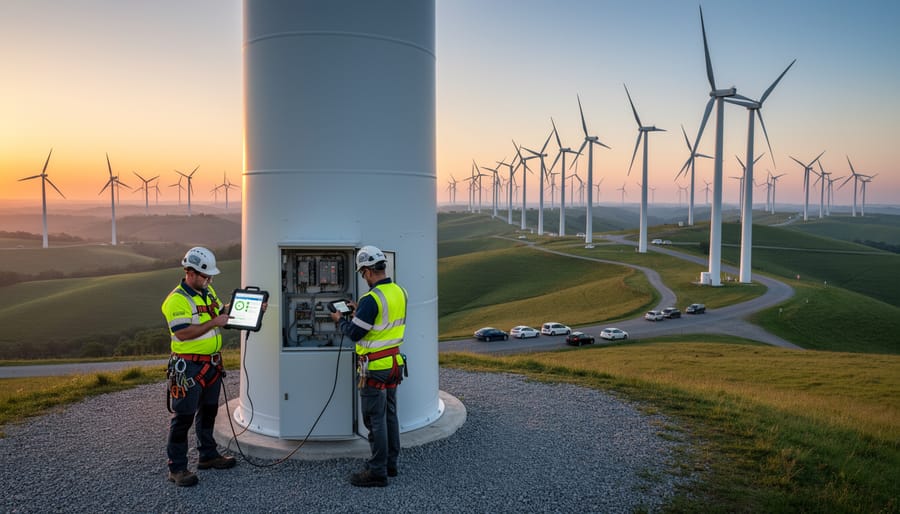
Wind farms come in two main flavors, and each takes a different route to the same goal: getting as much usable electricity as possible from moving air. Neither is simply “better.” They solve different problems, and investors tend to see the trade-offs show up in project economics.
Onshore wind is the established workhorse. Turbines sit on land, so crews can reach them with ordinary roads and cranes, and construction timelines are generally shorter. Costs per installed megawatt are typically lower, which is why onshore projects make up the bulk of the world’s wind capacity. The catch is that land-based winds are usually more variable, shaped by terrain, trees, and buildings, and good sites close to demand can be hard to find.
Offshore wind trades simplicity for scale. Winds over open water tend to be stronger and steadier, so turbines often reach higher capacity factors, meaning they produce closer to their theoretical maximum over a year. Offshore machines can also be enormous, since transporting oversized components by ship is easier than by road. But building in the sea means specialized vessels, marine foundations, subsea cables, and harsher conditions that make maintenance more demanding and expensive.
Pros
- Onshore projects usually cost less to build and connect to the grid.
- Onshore sites are easier and cheaper to reach for routine maintenance.
- Offshore winds are typically stronger and more consistent, supporting higher output per turbine.
- Offshore projects can use very large turbines without road transport limits.
Cons
- Onshore wind is more variable and can face local concerns over land use and noise.
- Offshore construction is costlier and relies on specialized ships and crews.
- Offshore maintenance depends on weather windows, which can extend downtime.
- Offshore projects often take longer from planning to power delivery.
Permitting adds another layer. Onshore developers negotiate with landowners, local communities, and regional authorities, and delays often come from zoning or neighborhood opposition. Offshore developers deal with seabed leasing, environmental reviews, shipping and fishing interests, and sometimes multiple government agencies, which can stretch timelines considerably.
For investors, the takeaway is that higher output potential does not automatically mean better returns. A pricier offshore project must earn its extra cost through stronger production, while a modest onshore site can deliver solid, steady results at lower risk. Looking at both the capacity factor and the cost to build gives a far clearer picture than either number alone.
Challenges to Productive Wind Energy Generation
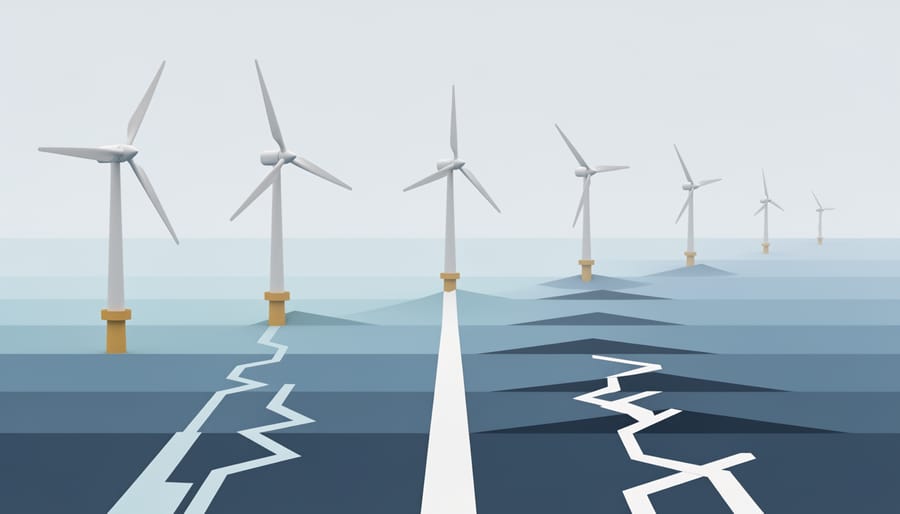
Even a well-sited wind farm rarely delivers its full potential. Several real-world obstacles stand between a spinning rotor and a dollar of revenue, and understanding them helps you separate realistic projects from optimistic ones.
Intermittency is the most familiar challenge. Wind speeds shift hour to hour and season to season, so output rises and falls on nature’s schedule rather than demand. A calm, cold evening can leave the grid short of supply just when people need heat most. This is where storage earns its place. Advances in battery technology let operators bank surplus power during windy stretches and release it later, smoothing the gap between production and demand.
Then there’s curtailment, which happens when a grid operator asks a wind farm to throttle back or shut off even though the wind is blowing. Usually the culprit is grid congestion: transmission lines simply can’t carry all the power a region generates, especially when the best wind sites sit far from big cities. Every curtailed megawatt-hour is lost revenue, so grid upgrades and new transmission lines matter as much as new turbines.
Supply chains add another layer of friction. Turbine blades, towers, and specialized installation vessels are large, costly, and made by a limited number of suppliers. Delays or price swings in materials can push project timelines and budgets off course. Permitting is its own hurdle, since environmental reviews, local approvals, and interconnection queues can stretch years before construction begins.
Hybrid projects offer one practical response. Pairing wind with solar or storage at a single connection point makes better use of the same grid access and levels out production across the day.
It’s also worth being fair to traditional energy sources. Natural gas, nuclear, and hydro plants still provide steady, dispatchable power that keeps the grid stable when wind output dips. Most grid planners see wind as one strong piece of a diverse mix rather than a standalone solution, and that balanced view is useful for any investor weighing risk.
What Wind Productivity Means for Investors
Metrics Worth Watching
Four numbers do most of the work when you’re sizing up a wind project or the companies behind it.
Capacity factor tells you how much a turbine actually produces compared with its theoretical maximum. A higher figure usually points to a strong site and solid equipment, which means steadier revenue per megawatt installed.
Availability measures the share of time a turbine is ready to run. Low availability can signal maintenance problems or reliability issues, and it quietly eats into returns even when the wind is plentiful.
Levelized cost of energy, often shortened to LCOE, spreads a project’s total lifetime costs across the electricity it generates. It lets you compare wind against other sources on a like-for-like basis, and a falling LCOE generally suggests improving competitiveness.
Power purchase agreements, or PPAs, are long-term contracts that lock in the price a buyer pays for the electricity. They matter because they make cash flow more predictable, which lenders and investors tend to value highly. A project with a long PPA at a fair price carries less market risk than one selling into volatile spot markets.
When you review annual reports or compare wind investment stocks look for these figures in company disclosures and see how they move over time. No single metric tells the full story, but together they reveal how well a wind operation turns breeze into dependable income.
Trends Shaping the Sector
Several long-running trends keep reshaping how wind power gets produced, and they’re worth following because they tend to show up in project economics well before they show up in headlines.
The first is scale. Turbines keep getting bigger, with longer blades and taller towers reaching steadier, stronger winds. A larger rotor sweeps more area, which generally lifts capacity factor and spreads fixed costs over more megawatt-hours.
The second is repowering. Many early wind sites sit in excellent locations, but their older machines are small and less efficient. Swapping them for modern turbines on existing land can raise output considerably while skipping some of the permitting and grid-connection hurdles of a brand-new site. For investors, that’s often a lower-risk way to add capacity.
Third, storage pairing. Because wind is intermittent, projects increasingly sit beside batteries or connect to broader storage resources. That helps smooth delivery, reduces curtailment, and lets operators sell power when prices are strongest rather than only when the wind blows.
Finally, offshore development continues to grow. Stronger, more consistent winds offshore support higher output, though construction is more complex and costs run higher. Progress here tends to come in stages, shaped by supply chains and permitting.
If you’re weighing these themes within a broader plan for alternative energy investing remember that trends describe direction, not guarantees. Check current company filings, earnings calls, and recent news for up-to-date figures before drawing conclusions.
Which of these trends do you follow most closely? Share your thoughts with the community.
Common Questions About Wind Energy Production
Readers tend to ask the same handful of things when they first look into wind power, so here are straight answers you can use as a reference point.
How much electricity does a single turbine produce?
It varies widely with turbine size, site quality, and wind conditions. A turbine’s rated capacity is its maximum output, but real-world generation is lower because wind speeds fluctuate, which is why capacity factor is such a useful yardstick.
What happens when the wind stops blowing?
The turbine simply produces less or nothing, and the grid makes up the difference from other sources such as hydro, natural gas, or stored energy. This is why grid planning and storage matter so much to reliable supply.
How long do wind turbines last?
Many are designed to operate for roughly two decades or more, and owners often extend that through maintenance or replace aging components in a process called repowering. Actual lifespan depends on the equipment, the environment, and how well the project is maintained.
How does wind compare with other generation sources?
Wind has no fuel costs and no direct emissions during operation, but its output depends on the weather. Traditional sources offer dispatchable power on demand, so most grids use a mix rather than relying on one source alone.
If you’re weighing wind against other clean options, it helps to look at the wider picture. A look at wind vs geothermal shows how a resource that’s always available underground differs from one that rises and falls with the weather. Likewise, tracking trends in solar installations can show how other renewables are scaling, which gives useful context when you judge where wind fits in a diversified portfolio. Have a question we didn’t cover? Share it with the community and let’s work through it together.
Producing wind energy well is never down to a single factor. A strong wind resource sets the ceiling, but site selection decides how much of it a project can actually use. Turbine design, from rotor size to tower height to predictive maintenance, determines how much of that wind turns into electricity. Then the grid has the final say: if power can’t be delivered, or gets curtailed when lines are congested, even a great turbine falls short of its potential.
That chain is exactly why this matters for your portfolio. Metrics like capacity factor, availability, and levelized cost of energy are the financial echo of everything above. When you understand what drives them, a company’s production numbers stop being abstract and start telling you something real about project quality and risk.
None of this means wind works in isolation. Traditional sources still help keep the grid reliable, and the strongest investment cases acknowledge that mix honestly rather than ignoring it.
Now it’s your turn. Which wind trends or metrics do you follow most closely? Are you watching offshore growth, repowering, or storage pairings? And what questions do you still have about how production translates into returns? Share your thoughts in the community, whether you’re just getting started or have been tracking this sector for years.