What Is Solar PV Thermal (and How Does It Work)?
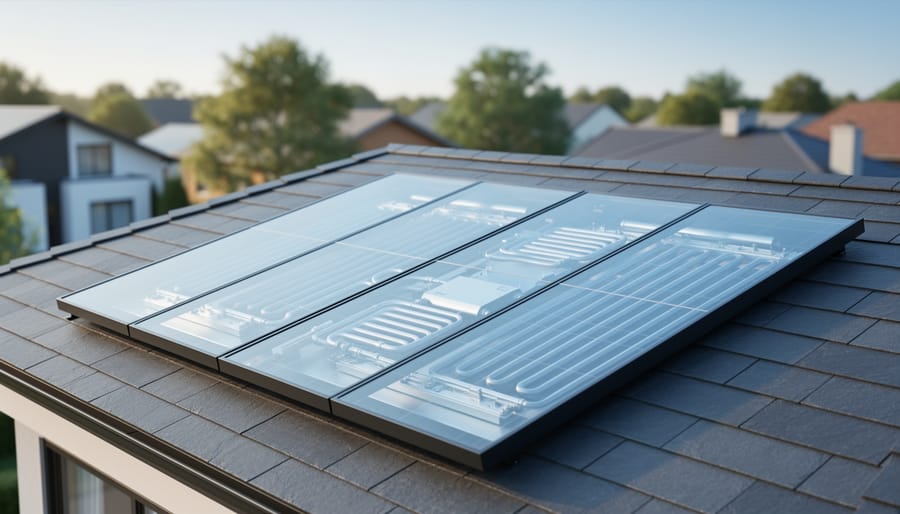
Solar PV thermal technology, commonly called PVT or photovoltaic thermal, combines electricity generation and heat capture in a single integrated panel. Unlike standard solar photovoltaic panels that produce only electricity or standalone thermal collectors that deliver only heat, PVT systems harvest both forms of energy from the same rooftop footprint.
This dual-output approach addresses a longstanding efficiency challenge in conventional solar panels. Traditional photovoltaic cells lose performance as they heat up under sunlight, sometimes dropping efficiency by 10-15% on hot summer days. PVT systems tackle this problem head-on by circulating liquid or air behind the photovoltaic layer to extract thermal energy while simultaneously cooling the electrical components. The result is steadier power output paired with usable hot water or air for residential and commercial applications.
For investors tracking the solar sector’s evolution in 2026, PVT represents a significant shift in how we think about space efficiency and energy density. Buildings with limited roof area can now meet both electrical and heating demands without choosing between competing technologies. Industrial facilities, hotels, and multi-family housing complexes are leading adoption, particularly in markets where both electricity costs and heating fuel expenses run high.
This article breaks down how PVT systems function at the component level, explains the differences between air-based and liquid-based configurations, and examines real-world deployment scenarios. We’ll also explore the investment considerations that matter most when evaluating PVT projects, from system sizing principles to performance expectations across different climate zones. Whether you’re considering PVT for a commercial property or analyzing manufacturers in this space, understanding the practical distinctions between hybrid and standalone systems helps identify where this technology delivers genuine value versus added complexity.
What Solar PV Thermal Technology Means
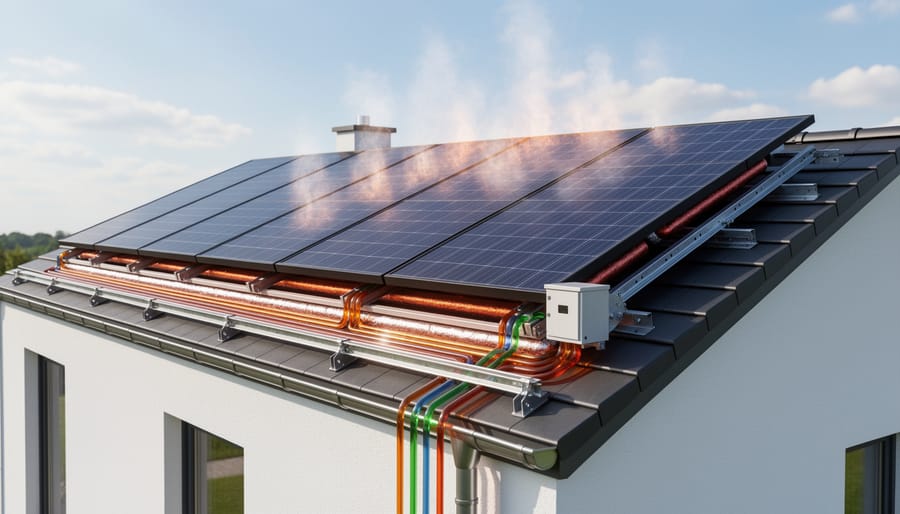
Solar PV thermal, often abbreviated as PVT, refers to a hybrid collector that merges two distinct solar technologies into one physical unit. Instead of installing separate photovoltaic panels to make electricity and solar thermal panels to generate heat, a PVT system does both jobs from the same roof space. Photovoltaic cells on the front face convert sunlight into electrical current in the usual way, while a heat-exchange layer immediately behind those cells captures the warmth that PV panels naturally produce during operation. That recovered heat flows into a domestic hot-water tank, a space-heating loop, or an industrial process that needs warm fluid or air.
Understanding the terminology helps clarify what makes PVT distinct:
- PVT (Photovoltaic-Thermal)
- A single integrated panel that generates electricity through PV cells and simultaneously collects usable heat from those cells’ operating temperature.
- Standalone Solar Thermal
- A collector designed solely to absorb solar radiation and convert it to heat, with no electricity production.
- Standalone PV
- A photovoltaic module that produces only electrical power, allowing waste heat to dissipate unused into the air.
- Hybrid Collector
- Another term for PVT systems, emphasizing the dual-output design that combines electrical and thermal energy capture.
- Thermal Efficiency
- The proportion of incoming solar energy that a system converts into usable heat.
- Electrical Efficiency
- The fraction of sunlight that photovoltaic cells turn into electrical current, typically expressed as a percentage.
The practical appeal lies in footprint efficiency. A building with limited roof area can harvest more total energy, kilowatt-hours of electricity plus kilowatt-hours of heat, from a PVT array than it could by covering the same space with either technology alone. Residential projects use the thermal output for showers and radiators, while commercial buildings may preheat ventilation air or feed process loads. As urban sites grow denser and rooftop real estate becomes scarcer, developers and investors are watching PVT adoption climb in markets where both electrical and thermal demand exist year-round.
How PVT Hybrid Collectors Work
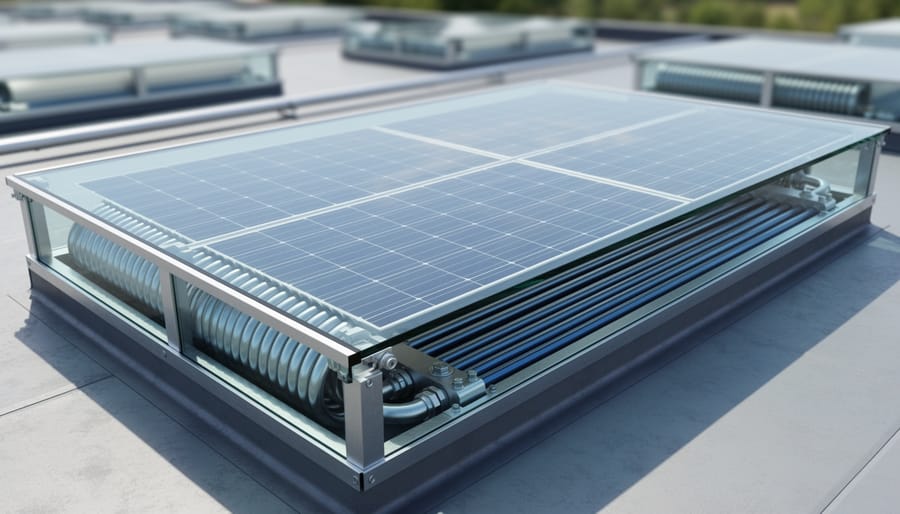
Solar PV thermal collectors work by addressing a fundamental challenge in photovoltaic technology: heat. When sunlight strikes a conventional PV panel, only about 15-20% of that energy converts to electricity, the rest becomes heat that raises the panel’s temperature. Higher temperatures degrade electrical efficiency, with most crystalline silicon cells losing roughly 0.4-0.5% of their power output for every degree Celsius above 25°C. PVT systems turn this limitation into an opportunity.
In a hybrid collector, a thermal absorber sits directly behind or is integrated with the photovoltaic cells. This component, whether a metal plate with fluid channels, an air gap with ducting, or a heat exchanger, actively removes heat from the PV layer. As the thermal system pulls heat away, it keeps the cells cooler than they would run in a standalone PV panel, which helps maintain higher electrical conversion rates throughout the day.
The captured thermal energy doesn’t disappear. Instead, a heat transfer medium (water, glycol solution, or air, depending on system design) carries it away from the panel. That heated medium then flows to wherever thermal energy is needed: a hot water tank, a hydronic heating system, a swimming pool, or even an industrial process requiring moderate-temperature heat. The result is two energy streams from one collector, electricity flowing to your breaker panel and thermal energy serving a heating load.
This dual-capture approach means PVT systems extract more total energy per square foot of roof or ground space than installing separate PV and solar thermal panels. The efficiency gain comes not from revolutionary technology but from intelligent integration: coupling two proven energy conversion methods in a single unit that addresses the thermal management challenge inherent to photovoltaics while delivering useful heat.
Types of Solar PV Thermal Systems
Liquid-Based PVT Systems
Liquid-based PVT systems run water or glycol solution through thin channels mounted behind or embedded within photovoltaic panels. As sunlight heats the PV cells, the circulating fluid absorbs that thermal energy and carries it away to storage tanks or heat exchangers. This continuous heat removal keeps the panels cooler, which helps maintain electrical output while simultaneously providing hot water for domestic use, radiant floor heating, or pool heating.
The fluid loop typically connects to an insulated storage tank where the heated water remains available for household needs, showers, dishwashing, laundry, or feeds into hydronic heating systems that distribute warmth through radiators or in-floor tubing. Some installations integrate the thermal output with existing boiler systems to reduce fuel consumption during colder months.
Freeze protection becomes critical in cold climates. Systems designed for freezing conditions use propylene glycol antifreeze mixtures instead of plain water, or they incorporate automated drain-back features that empty the collector loops when temperatures drop. Without these safeguards, frozen fluid can crack panels and rupture piping. Installers must match the glycol concentration and system design to local winter conditions, which adds complexity but makes liquid-based PVT viable in regions where standalone solar thermal struggled with seasonal performance gaps.
The glycol approach requires periodic fluid replacement as the antifreeze degrades over years of thermal cycling.
Air-Based PVT Systems
Air-based PVT systems pass ambient air across the rear surface of photovoltaic panels, drawing heat away from the cells while warming the airstream for building use. A simple fan arrangement pulls room air or outside air through a plenum or channel behind the PV array, then distributes the warmed air into the occupied space or HVAC system. This approach eliminates pumps, plumbing, and antifreeze fluids, reducing both installation complexity and the ongoing maintenance burden that liquid systems face.
The design suits cold-climate applications particularly well because freezing presents no risk; there’s no circulating liquid to protect during winter shutdowns. Builders commonly integrate air-based PVT into passive solar designs, using the heated air to preheat ventilation intake or supplement space heating during daylight hours. The technology also works for agricultural drying operations, where warm air output aligns directly with crop processing needs.
Installation tends to be more straightforward than liquid variants since the thermal pathway requires only ducting rather than sealed piping and heat exchangers. Maintenance intervals stretch longer without fluid leaks, corrosion concerns, or glycol replacement cycles. Performance depends heavily on airflow rates and duct design, undersized fans or restrictive channels limit heat recovery, but when matched properly to a building’s ventilation needs, air-based systems deliver reliable dual-energy output with minimal operational oversight.
Concentrating PVT Systems
Concentrating PVT systems push the integration concept into higher-performance territory by adding optical elements, mirrors, lenses, or reflective troughs, that focus sunlight onto much smaller areas of photovoltaic cells. This concentration allows the use of premium, high-efficiency cells that would be cost-prohibitive in flat-panel designs, while the intense heat generated becomes a resource rather than a problem. The thermal system captures this concentrated heat for industrial processes, district heating, or even power generation cycles that benefit from elevated temperatures.
These advanced configurations remain largely confined to research laboratories and utility-scale pilot projects rather than commercial deployment. The engineering complexity is considerable: tracking systems must follow the sun’s path throughout the day to maintain focus, and cooling the cells becomes critical to prevent thermal damage at concentration ratios that can exceed 100 suns. Installation requires more precise alignment and ongoing maintenance than passive flat panels.
From an investment standpoint, concentrating PVT represents a longer horizon. The technology shows promise for specific applications where both electricity and high-grade heat command value, but scaling beyond demonstration projects faces hurdles in cost reduction and operational simplification. Investors evaluating companies in this space should recognize the research-to-commercialization timeline typical of advanced solar technologies and assess whether the team has credible pathways to reducing complexity while proving real-world durability.
Where PVT Technology Is Being Deployed
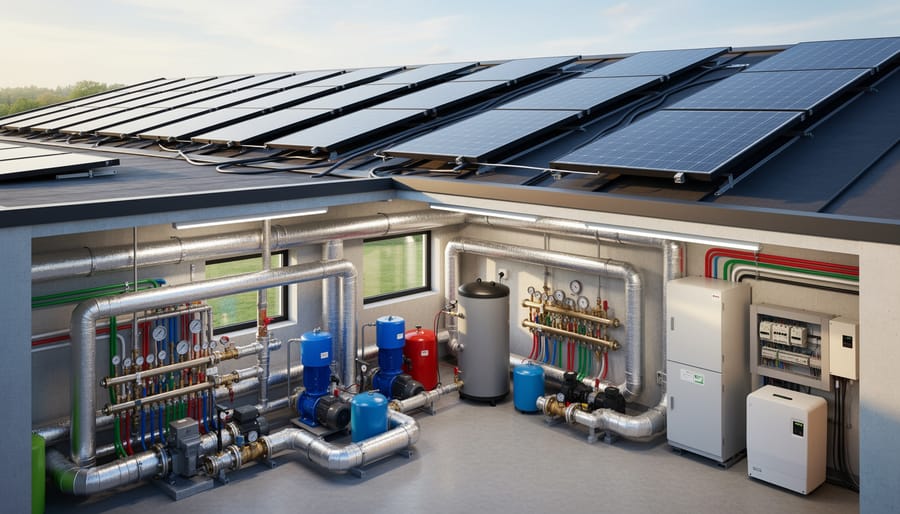
Deployment of PVT technology has expanded beyond pilot projects into commercial-scale installations across multiple sectors, though adoption patterns vary significantly by region and application type. The residential segment leads current market penetration, particularly in European markets where rooftop space constraints and high energy costs create compelling economics for dual-output systems. Homeowners integrate PVT panels to simultaneously offset electricity bills and meet domestic hot water demand, reducing reliance on grid power and fossil fuel heating. This dual benefit appeals particularly in retrofit scenarios where adding separate solar thermal and PV arrays would exceed available roof area.
Commercial buildings represent the fastest-growing deployment category, driven by corporate sustainability mandates and the ability to serve multiple energy loads within a single facility. Office complexes, hotels, and healthcare facilities use PVT systems for space heating, cooling system preheating, and baseload hot water production alongside electrical generation. The technology pairs well with heat pumps in commercial applications, where PVT-generated electricity powers the pump while captured thermal energy supplements the heating loop, improving overall system efficiency.
Key sectors currently deploying or piloting PVT technology include:
- Residential water heating with rooftop integration
- Commercial building HVAC preheating and space conditioning
- Industrial process heat for manufacturing operations
- District heating networks in high-density urban areas
- Agricultural drying operations for crop processing
- Swimming pool heating at recreation facilities
Industrial applications remain more specialized but offer substantial scale opportunities for investors tracking large-project development. Food processing plants, textile manufacturers, and chemical facilities with consistent thermal loads at moderate temperatures can integrate PVT arrays to offset both electricity and process heat costs. These installations typically feature larger system sizes and longer operational hours than residential deployments, creating attractive economies of scale.
District heating networks in northern European cities have begun incorporating PVT technology as distributed generation assets, feeding both electricity back to the grid and thermal energy into community heating loops. This model remains geographically limited but demonstrates how PVT fits into broader energy system integration strategies that utilities and municipalities are exploring.
Agricultural applications, while still emerging, show promise in regions with substantial drying needs for grain, fruit, or biomass processing. Farm operations benefit from the dual energy output during harvest seasons when both electricity demand for equipment and thermal demand for drying peak simultaneously. Investors monitoring rural electrification and agricultural modernization trends should watch this segment as system costs decline and awareness spreads through farming cooperatives and equipment suppliers.
Investment Landscape and Market Dynamics
The PVT market sits at the intersection of two maturing solar technologies, creating a distinct investment profile that rewards careful analysis. Manufacturing has consolidated around a handful of European and Asian players, though new entrants continue to emerge as production methods evolve and component costs decline through learning-curve effects and economies of scale. Unlike the commoditized standard PV panel market, hybrid systems still occupy a specialty segment where differentiation matters and margins remain healthier for manufacturers with proven track records.
Cost evolution follows a familiar renewable energy trajectory: early adopter premiums give way to gradual price compression as manufacturing volumes grow and installation processes standardize. Investors tracking broader PV installation trends will recognize similar patterns, though PVT adoption lags conventional solar by several years on the deployment curve. This timing creates opportunity for those willing to assess companies before the mass-market inflection point arrives.
Policy drivers vary sharply by jurisdiction. Some European markets offer enhanced incentives for combined heat-and-power systems that recognize both thermal and electrical output, effectively improving project economics compared to standalone PV. North American policy remains fragmented, with certain states and provinces providing building performance credits or renewable thermal carve-outs while others treat PVT as standard solar. Federal tax incentives typically apply to the electrical generation component, leaving thermal benefits unmonetized unless local programs fill that gap.
Competitive positioning against standalone systems hinges on specific project constraints. Where roof space is scarce and thermal demand is steady, PVT can deliver compelling value by meeting two needs in one footprint. Where either constraint is absent, separate optimized systems often win on pure economics. This creates a targeted market rather than wholesale displacement, which investors should factor into addressable market estimates.
Integration trends are reshaping the solar sector beyond just PVT. Companies developing multi-functional building products that combine generation, storage, thermal management, or structural elements represent a distinct category within alternative energy investing. These businesses face different engineering challenges and commercialization timelines than pure-play PV manufacturers, but they also avoid direct competition in crowded commodity markets.
Market adoption responds to three primary forces: building codes that increasingly mandate renewable thermal alongside electrical generation, incentive structures that recognize dual-output systems, and energy pricing where high electricity costs combine with significant heating loads. Investors evaluating alternative energy stocks in this space should map these regulatory and price environments to understand which geographies offer near-term growth versus longer-term potential.
Performance Considerations for PVT Investments
Evaluating PVT systems requires understanding how technical performance translates into investment value. Climate drives the equation significantly, regions with strong solar resources and substantial heating loads offer the most compelling economics, while hot climates with minimal thermal demand may see the thermal component underutilized. Investors should assess whether target markets align with both photovoltaic and thermal needs.
Space constraints often determine PVT’s advantage. Where roof area limits separate solar installations, a hybrid system captures both energy forms from the same footprint. This becomes particularly relevant in dense urban markets or commercial buildings with high energy intensity per square meter. Companies serving space-constrained sectors may see stronger adoption trajectories.
Thermal demand matching matters as much as solar resource. A building with year-round hot water needs captures thermal output consistently, while seasonal heating applications leave capacity idle for months. Investors evaluating PVT projects or manufacturers should examine customer profiles, hospitality, healthcare, and multi-family residential typically offer steady thermal loads that justify the integrated approach.
System complexity introduces maintenance and reliability considerations. PVT units involve both electrical and plumbing or air-handling components, creating more failure points than standalone panels. Companies with proven installation expertise and service networks reduce this risk. For investors, track records matter more than theoretical performance claims.
Pairing PVT with battery storage can enhance value by capturing surplus electrical output during high-production periods, though this adds cost and complexity to the overall system design.
The technology suits specific niches well but isn’t universally optimal. Investment potential centers on identifying manufacturers and projects where site conditions, energy profiles, and market incentives converge to make integration advantageous over separate systems.
Common Questions About Solar PV Thermal Systems
Investors evaluating PVT technology often ask similar questions as they weigh opportunities in this emerging segment. Understanding the answers helps sharpen due diligence and identify which companies and projects merit closer attention.
How does PVT efficiency compare to installing separate PV and solar thermal systems?
PVT systems capture more total energy per square foot than separate installations, making them advantageous where roof space is limited. However, the electrical efficiency of PVT panels may be slightly lower than premium standalone PV modules, while thermal output depends heavily on having consistent heat demand to justify the added complexity.
What factors affect payback periods for PVT investments?
Payback depends on local electricity and fuel prices, available incentives, the ratio of thermal to electrical demand at the site, and whether the system displaces expensive heating sources like propane or oil. Systems in cold climates with high heating loads and strong net metering policies generally show faster returns than installations in mild climates with minimal thermal needs.
What maintenance do PVT systems require?
Liquid-based systems need periodic checks of fluid levels, pressure, and antifreeze concentration, similar to conventional solar thermal maintenance. Air-based systems typically require less maintenance, mainly filter cleaning and fan inspection, while the PV components follow standard panel maintenance schedules regardless of system type.
How can I identify promising PVT manufacturers and projects?
Look for companies with certified products, documented field installations beyond pilot stages, transparent performance data, and established distribution networks. Strong candidates often have partnerships with major construction firms or utilities, third-party testing validation, and clear warranty structures covering both electrical and thermal components.
Climate suitability varies by system design. Liquid-based PVT works well in regions with consistent heating demand but requires freeze protection where temperatures drop below 32°F, adding complexity and cost. Air-based systems avoid freezing concerns entirely, making them simpler for cold climates, though they deliver lower-grade heat better suited to space warming than domestic hot water. Concentrating PVT systems perform best in areas with high direct sunlight, limiting their geographic applicability compared to flat-plate designs.
Retrofitting existing solar installations with thermal collection rarely makes economic sense, since the electrical and thermal components need integrated design from the start to function efficiently. Properties already have standalone PV should evaluate whether adding separate solar thermal collectors for specific heating loads offers better returns than attempting a hybrid retrofit. For new construction and major renovations, however, PVT deserves consideration alongside separate systems during the initial planning stage when space optimization and energy modeling can properly account for dual output.
Solar PV thermal technology stands at the intersection of two proven renewable energy pathways, representing exactly the kind of integration trend that serious alternative energy investors should monitor closely. As manufacturers refine hybrid designs and installers gain experience with diverse applications, PVT systems are carving out a growing niche where space constraints, dual energy needs, and efficiency optimization align. The investment case rests not on revolutionary breakthroughs but on incremental improvements that make combined solutions increasingly competitive with separate installations in specific contexts.
For those building portfolios around the energy transition, companies developing or deploying PVT technology warrant attention as part of a broader solar sector strategy. This isn’t a replacement for conventional PV or standalone thermal systems, but an emerging option that addresses real-world constraints in residential, commercial, and industrial settings. Track how policy incentives, building codes, and energy pricing evolve to favour integrated approaches.
We encourage you to share your perspectives and questions in the Dforce Solar community. Whether you’re evaluating specific PVT manufacturers, analyzing market adoption patterns, or simply exploring how hybrid technologies fit within renewable portfolios, collective insights strengthen everyone’s understanding of this maturing segment.