
What Are the Breakthrough Advancements in Battery Technology (and How Do They Work)?
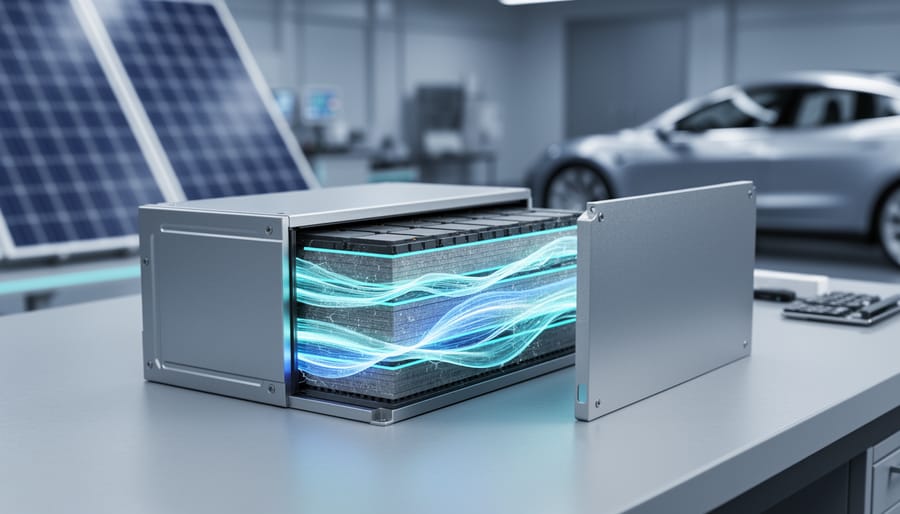
A breakthrough in battery technology is an innovation that substantially improves one or more critical performance metrics, energy density, charging speed, safety, lifespan, or cost, making energy storage more practical and economically viable for widespread adoption. These advances matter because batteries remain the biggest bottleneck in the transition to renewable energy, determining whether electric vehicles can match gasoline cars on range and convenience, whether solar panels can power homes through the night, and whether grid-scale storage can replace fossil fuel peaker plants.
For alternative energy investors in 2026, understanding battery breakthroughs has become essential. The energy storage landscape is shifting rapidly. Lithium-ion technology, which dominated the past two decades, now faces serious competition from sodium-ion, solid-state, and lithium-metal designs entering commercial production. Manufacturing costs have dropped significantly, but not uniformly across all chemistries. Some innovations promise 50% improvements in energy density while others target production costs that could slash electric vehicle prices.
This article examines what qualifies as a genuine battery breakthrough, how the most promising new technologies actually work at a fundamental level, the distinct categories of innovation reshaping the market, and where these advances are creating investment opportunities right now. Whether you’re evaluating solar companies with integrated storage solutions or considering battery manufacturer equities, the innovations covered here will shape alternative energy returns for the next decade.
What Battery Technology Breakthroughs Mean for Energy Storage
A battery technology breakthrough is an advancement that meaningfully shifts what energy storage can do, not just a small tweak, but a change that opens new markets, enables previously impossible applications, or dramatically lowers barriers to adoption. For investors in renewable energy, distinguishing true breakthroughs from incremental progress matters because the former creates genuine opportunities while the latter simply refines existing positions.
True breakthroughs typically deliver step-change improvements in one or more critical performance dimensions. A battery that stores twice the energy in the same volume, charges in minutes instead of hours, lasts three times longer, operates safely in extreme conditions, or costs half as much per unit of capacity, any of these can fundamentally alter market dynamics. Incremental improvements, by contrast, might boost performance by 5-10% or shave costs modestly through manufacturing refinements. Those matter for competitiveness, but they don’t rewrite the rules.
- Energy Density
- The amount of energy stored per unit of weight or volume, measured in watt-hours per kilogram (Wh/kg) or watt-hours per liter. Higher energy density means longer range for electric vehicles or lighter devices.
- Cycle Life
- The number of charge-discharge cycles a battery can complete before its capacity degrades to 80% of original performance. Longer cycle life directly reduces the total cost of ownership.
- Charging Rate
- How quickly a battery can accept energy, often expressed as a C-rate (1C means full charge in one hour, 2C means 30 minutes). Faster charging removes a major adoption barrier for electric vehicles and portable electronics.
- Cost per kWh
- The price to store one kilowatt-hour of energy, the key economic metric for both manufacturers and end users. Lower costs make renewable energy storage financially viable for more applications.
Context matters too. A breakthrough for grid storage, where weight doesn’t matter but cost and longevity do, looks different from a breakthrough for aviation, where energy density is paramount. The market impact comes from matching the right performance leap to a bottleneck that’s been holding back adoption. Solid-state batteries promising higher energy density and better safety could unlock mass-market electric aviation, for instance, while cheap sodium-ion cells might finally make home energy storage economically compelling for average households.
Investors should watch for breakthroughs that address multiple constraints simultaneously. A technology that cuts costs while also improving safety and lifespan creates compounding value, because it removes several adoption barriers at once and can displace incumbents across multiple segments.
How Modern Battery Innovations Work
Chemistry and Material Innovations
The most consequential battery breakthroughs start at the molecular level, where choosing the right materials determines how much energy a cell can store, how quickly it charges, and how long it lasts.
Traditional lithium-ion batteries use graphite anodes because graphite is stable and affordable. But graphite has a theoretical energy density ceiling, which is why researchers have spent years perfecting silicon-based alternatives. Silicon boosts anode energy density by nearly ten times compared to graphite, enabling lighter, longer-range electric vehicles. The challenge has been silicon’s tendency to swell and crack during charge cycles, degrading performance. Recent innovations use nanostructured silicon composites and polymer binders that accommodate expansion without fracturing, turning a lab curiosity into a viable commercial material.
Equally transformative are solid-state electrolytes, which replace the flammable liquid electrolytes in conventional cells with ceramic or polymer solids. Solid electrolytes enable higher voltages, eliminate dendrite formation that causes short circuits, and tolerate higher operating temperatures. These qualities translate directly into safer, denser batteries that can operate in extreme conditions without thermal runaway risks.
Advanced separators, the thin membranes between electrodes, also play a critical role. New ceramic-coated and multilayer separators improve thermal stability and prevent internal shorts, extending lifespan while reducing fire hazards. Together, these material innovations don’t just nudge performance upward; they fundamentally redefine what batteries can do and where they can operate safely.
Manufacturing and Design Breakthroughs
Manufacturing innovation has quietly transformed battery performance as much as any new chemistry. Cell-to-pack and cell-to-chassis designs, which eliminate traditional module housings and mount cells directly into the battery pack or vehicle frame, reduce weight and wasted space while improving structural integrity. Tesla’s structural battery pack and BYD’s Blade Battery exemplify this approach, both deliver higher energy density and better crash safety by rethinking how cells fit together, not by inventing entirely new materials.
Production speed matters too. Dry electrode coating, a technique pioneered by Maxwell Technologies and now scaling at Tesla, eliminates the energy-intensive drying ovens used in conventional manufacturing. The process cuts production costs, shrinks factory footprints, and enables thicker electrodes that store more energy per cell. As more manufacturers adopt dry coating and similar streamlined methods, the cost curve for advanced batteries continues to bend downward.
Thermal management breakthroughs prevent performance degradation and safety failures. Liquid cooling channels integrated into pack designs keep cells within optimal temperature ranges during fast charging and high-power discharge. Some manufacturers now embed cooling plates between cell layers or use immersion cooling with dielectric fluids, strategies that extend battery lifespan and unlock faster charging without risking thermal runaway. Better heat management also means batteries perform more consistently across climates, a critical factor for both EVs and grid storage installations where reliability determines investment returns.
Types of Battery Technology Breakthroughs
Next-Generation Lithium Batteries
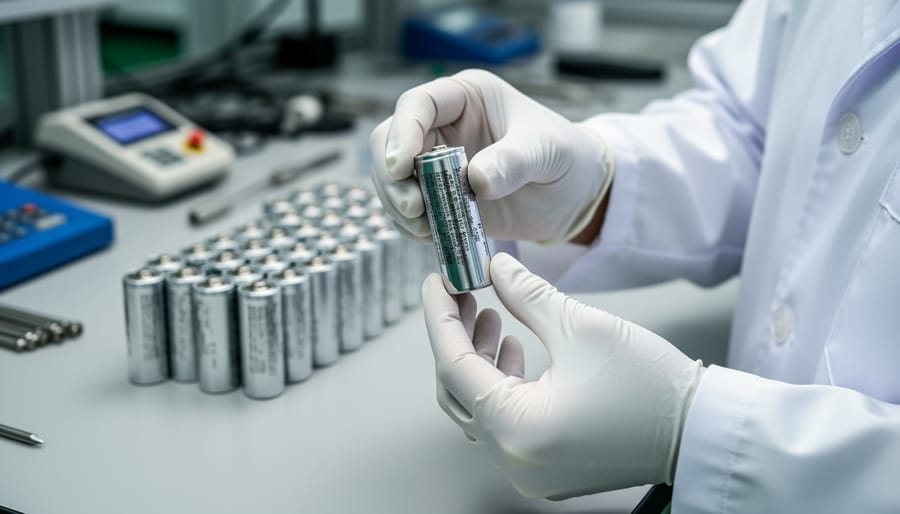
Next-generation lithium batteries keep the chemistry investors already trust while pushing past the limits of conventional lithium-ion cells. Solid-state lithium batteries replace the liquid or gel electrolyte with a solid ceramic or polymer layer, enabling higher energy density and faster charging. Because solid electrolytes are less flammable than liquid electrolytes, these designs also reduce thermal runaway risk. Companies like QuantumScape and Solid Power are racing to scale production, though manufacturing challenges remain.
Lithium-metal anodes pair a pure lithium metal electrode with advanced separators and electrolytes to unlock energy densities that can exceed 500 Wh/kg, roughly double the industry standard. The trade-off has been dendrite formation, which causes short circuits and degradation. Recent advances in protective coatings and solid-state architectures are beginning to tame this problem, making lithium-metal designs commercially viable for premium electric vehicles and aerospace applications where weight matters most.
Advanced lithium-ion improvements target incremental gains that add up. Silicon anodes boost capacity by replacing some graphite, nickel-rich cathodes increase voltage, and smarter battery management systems squeeze more cycles from existing chemistries. These refinements deliver 10 to 20 percent performance gains without requiring entirely new supply chains, which is why they dominate the mass market today. For investors, the lesson is clear: revolutionary chemistries grab headlines, but evolutionary improvements often deliver faster returns.
Alternative Chemistry Batteries
Sodium-ion batteries have emerged as one of the most promising alternatives to lithium-ion technology, particularly for applications where cost matters more than maximum energy density. These cells replace lithium with sodium, an element roughly 1,000 times more abundant in Earth’s crust, using similar electrochemistry and manufacturing processes. Several Chinese manufacturers now produce sodium-ion batteries at commercial scale for electric vehicles and stationary storage, offering material costs up to 30% lower than equivalent lithium-ion packs. The trade-off is roughly 20-30% lower energy density, which makes sodium-ion better suited for shorter-range vehicles, backup power systems, and grid storage than for premium electric cars.
Lithium-sulfur batteries represent a different approach: swapping the conventional metal oxide cathode for sulfur, which is cheap and lightweight. Theoretical energy density reaches nearly five times that of current lithium-ion cells, potentially enabling 500-mile electric vehicle ranges at lower weight. The challenge has been cycle life, sulfur cathodes historically degraded within dozens of charge cycles as intermediate compounds dissolved and migrated. Recent advances in protective coatings and electrolyte additives have pushed some laboratory prototypes past several hundred cycles, though commercial viability remains uncertain.
Other chemistries include aluminum-ion, magnesium-ion, and zinc-based designs, each targeting specific cost or performance niches. Most remain in early research stages, with fundamental materials challenges yet to solve. Investors should watch for which technologies secure large-scale pilot production funding, as that signals genuine commercial potential beyond laboratory curiosity.
Grid-Scale and Specialty Storage
Grid-scale storage demands different priorities than portable batteries: duration matters more than energy density, and systems must deliver reliable power for hours or days rather than minutes. This shift opens the door for chemistries that wouldn’t work in a smartphone or car but excel when size and weight constraints disappear.
Flow batteries separate energy storage from power delivery by pumping liquid electrolytes through a reactor cell. Vanadium redox flow batteries already operate in utility installations, offering virtually unlimited cycle life since the active materials never degrade structurally, they just recirculate through the system. Scaling capacity means adding bigger storage tanks, not redesigning the entire battery stack. The technology trades lower energy density for operational flexibility, making it ideal for smoothing renewable generation over 4-to-10-hour windows.
Zinc-air batteries pull oxygen from ambient air rather than storing it internally, dramatically reducing system weight and material costs. Emerging zinc-based designs target seasonal storage applications where batteries might cycle only occasionally but need to hold charge for weeks. The challenge lies in rechargeability, early zinc-air cells were disposable, but recent innovations in bifunctional air electrodes and zinc morphology control are changing that equation.
Iron-air, sodium-sulfur, and other specialty chemistries occupy their own performance niches. Iron-air systems promise multi-day duration at extremely low costs using abundant materials, though they currently sacrifice round-trip efficiency. High-temperature sodium-sulfur batteries already support grid infrastructure in regions with established installations, demonstrating that multiple technologies can coexist when applications vary. Investors evaluating this space should assess which duration ranges and cycling patterns each chemistry serves best, rather than expecting one solution to dominate all stationary storage markets.
Real-World Applications and Uses

Battery breakthroughs translate into measurable gains across four primary markets, each creating distinct investment opportunities as technology migrates from laboratory demonstrations to commercial deployment.
Electric vehicles represent the largest single application. Solid-state batteries now entering production enable ranges exceeding 500 miles on a single charge while reducing charging times to under 15 minutes, performance that addresses the two biggest consumer barriers to EV adoption. Manufacturers integrating silicon-anode technology report 20-30% energy density improvements over conventional lithium-ion packs, translating directly into lighter vehicles with better acceleration and handling. The commercial viability of these advances shows in automaker commitments: major manufacturers have shifted timelines forward, planning all-electric lineups earlier than previously announced as breakthrough batteries make the economics more favorable.
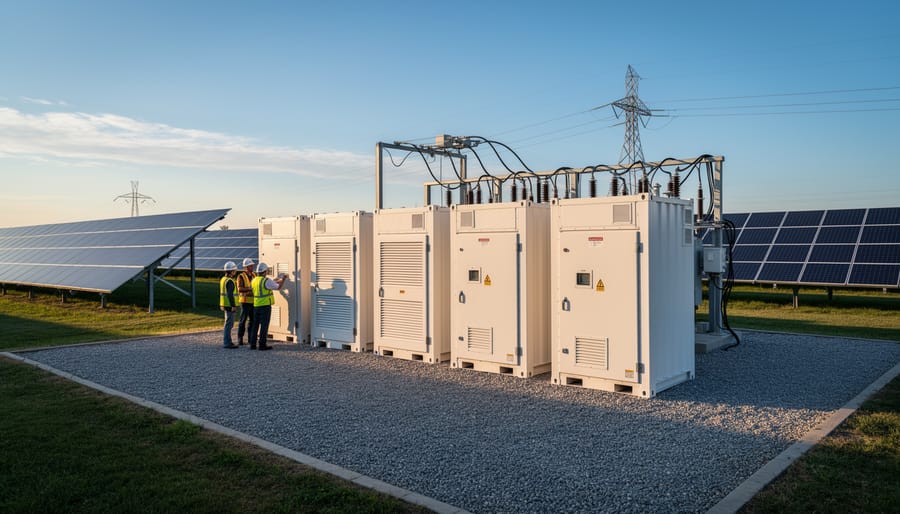
Grid-scale renewable energy storage benefits from different breakthrough priorities. Flow batteries and sodium-ion systems excel here because longevity and cost matter more than weight or space efficiency. Utility-scale installations using these technologies now achieve cycle lives exceeding 10,000 full charge-discharge cycles, roughly 27 years of daily operation, while cutting per-kilowatt-hour storage costs substantially below earlier lithium-ion deployments. This performance makes it economically practical to store solar generation for overnight use and smooth wind power fluctuations, directly enabling higher renewable penetration on electrical grids.
Consumer electronics adoption happens fastest because smaller form factors and shorter development cycles accelerate commercialization. Smartphones and laptops incorporating silicon-composite anodes already ship with 30% longer battery life in the same physical space, while improved thermal management systems from breakthrough designs reduce overheating incidents that previously triggered recalls.
Industrial and specialty applications exploit specific breakthrough characteristics. Lithium-sulfur batteries power high-altitude drones requiring maximum energy per unit weight. Zinc-air systems run remote sensors and IoT devices for years without replacement. Manufacturing equipment benefits from fast-charging capabilities that eliminate lengthy battery swap procedures during shift changes.
Each application sector values different breakthrough attributes, creating multiple parallel commercialization pathways rather than a single winner-take-all technology race. This diversity spreads investment opportunities across chemistry types, manufacturing approaches, and end-use markets.
Investment Implications and Market Trends

Battery breakthroughs are fundamentally altering the investment calculus across multiple sectors. For alternative energy investors, these advances create opportunities in three distinct layers: upstream material suppliers, midstream manufacturers, and downstream deployment companies. Each layer responds differently to technological progress, and understanding these dynamics helps investors position portfolios strategically.
The upstream layer, companies producing lithium, nickel, cobalt, and emerging materials like manganese, benefits from expanding battery production regardless of which specific chemistry wins. However, breakthrough chemistries that reduce or eliminate expensive materials can shift value away from certain resource plays. Investors tracking material innovation patents and pilot production announcements gain early signals about which resources face growing versus declining demand.
Manufacturing represents the most direct exposure to battery breakthroughs. Companies that successfully commercialize next-generation designs capture significant value, but this sector also carries substantial risk. The gap between laboratory performance and mass production consistently proves wider than initial timelines suggest. Investors should monitor manufacturing yield rates, cost-per-kilowatt-hour trends, and partnership announcements with major automotive or grid operators as indicators of genuine commercial traction rather than relying solely on performance claims.
Downstream opportunities appear in industries transformed by better batteries. Electric vehicle manufacturers benefit from longer range and faster charging. Renewable energy developers gain viable storage solutions that make solar and wind more competitive with baseload power. Consumer electronics companies can redesign products around improved power density. These sectors often provide more stable investment opportunities than the volatile battery manufacturing space itself.
Several trends warrant close attention. First, diversification away from single-chemistry dependence reduces supply chain risk, potentially favoring companies with multi-chemistry capabilities. Second, domestic manufacturing incentives in major markets are reshaping production geography, creating regional investment opportunities. Third, battery recycling and second-life applications are emerging as significant value streams as early EV batteries reach end-of-life.
Rather than chasing individual breakthrough announcements, disciplined investors focus on companies demonstrating consistent progress toward commercial scale, established customer relationships, and clear paths to profitability. The most valuable breakthroughs aren’t always the most technically impressive, they’re the ones that reach market at competitive prices.
Common Questions About Battery Breakthroughs
When evaluating battery breakthroughs, investors and renewable energy advocates often struggle to separate transformative advances from marketing hype. Understanding realistic timelines, cost dynamics, and environmental trade-offs helps you make informed decisions about which technologies merit attention, and which ones remain years from commercial viability.
When will breakthrough battery technologies reach mass production?
Most solid-state and advanced chemistry batteries are in pilot production phases, with limited commercial deployment expected between 2027 and 2030 for specific applications like premium electric vehicles. Broader mass-market adoption typically follows five to ten years after initial commercialization as manufacturing scales and costs decline.
Are new battery technologies more environmentally sustainable than lithium-ion?
Many emerging chemistries reduce reliance on scarce materials like cobalt and use more abundant elements such as sodium or sulfur, which improves resource sustainability. However, each technology carries its own environmental footprint through manufacturing processes and end-of-life disposal, so lifecycle assessments vary significantly by chemistry and production method.
How can I evaluate whether a battery company’s claims represent genuine progress?
Look for peer-reviewed testing data, third-party validation, and evidence of pilot-scale production rather than lab-only results. Companies demonstrating reproducible performance across hundreds of charge cycles under real-world conditions, not just theoretical maximum values, signal credible advancement.
What role do battery breakthroughs play in grid-scale renewable energy storage?
Advanced batteries enable longer-duration storage that bridges gaps when solar and wind generation drops, making renewable grids more reliable and reducing dependence on fossil fuel backup power. Technologies like flow batteries and sodium-ion systems are particularly suited for stationary storage where weight matters less than cost per kilowatt-hour.
The distinction between a promising laboratory result and a scalable commercial product matters enormously for investment decisions. A battery achieving impressive energy density in controlled lab tests faces entirely different challenges when manufactured at scale, exposed to temperature extremes, or cycled thousands of times in actual field conditions. Companies that transparently share performance data across multiple metrics, not just cherry-picked highlights, tend to deliver more reliable technologies.
Cost trajectories remain difficult to predict with precision because manufacturing scale, supply chain maturity, and raw material prices all influence final economics. Rather than accepting specific dollar projections, focus on understanding the fundamental drivers: whether a technology uses abundant materials, whether production processes can leverage existing manufacturing infrastructure, and whether the design allows for iterative cost reduction as volumes grow.
Battery technology breakthroughs sit at the intersection of scientific innovation and investment potential. As we’ve explored, recent advances, from solid-state designs to alternative chemistries and manufacturing improvements, are fundamentally changing what energy storage can achieve. These aren’t just laboratory curiosities; they’re enabling the electric vehicle revolution, making renewable energy more reliable, and opening new market segments that didn’t exist five years ago.
For investors, understanding these breakthroughs means recognizing where real progress is happening versus where hype dominates. The companies and technologies that solve practical problems, cost reduction, faster charging, longer lifespan, better safety, will capture value as the energy transition accelerates. Tracking which innovations move from prototype to production, and which partnerships form around promising technologies, gives you an edge in identifying opportunities before they become obvious.
But this field evolves rapidly. What looks like a game-changing breakthrough today might face unforeseen scaling challenges tomorrow, while a quiet development in manufacturing could suddenly make an entire chemistry viable at scale. That’s why ongoing learning and community engagement matter.
We’d love to hear your perspective in the Dforce Solar community. Are you tracking specific battery technologies? Have you invested in companies developing these innovations? What questions do you have about emerging trends? Join the discussion and share your insights, collectively, we can spot opportunities and navigate challenges that individual investors might miss. The breakthrough we discuss next month could be the one you flag this week.